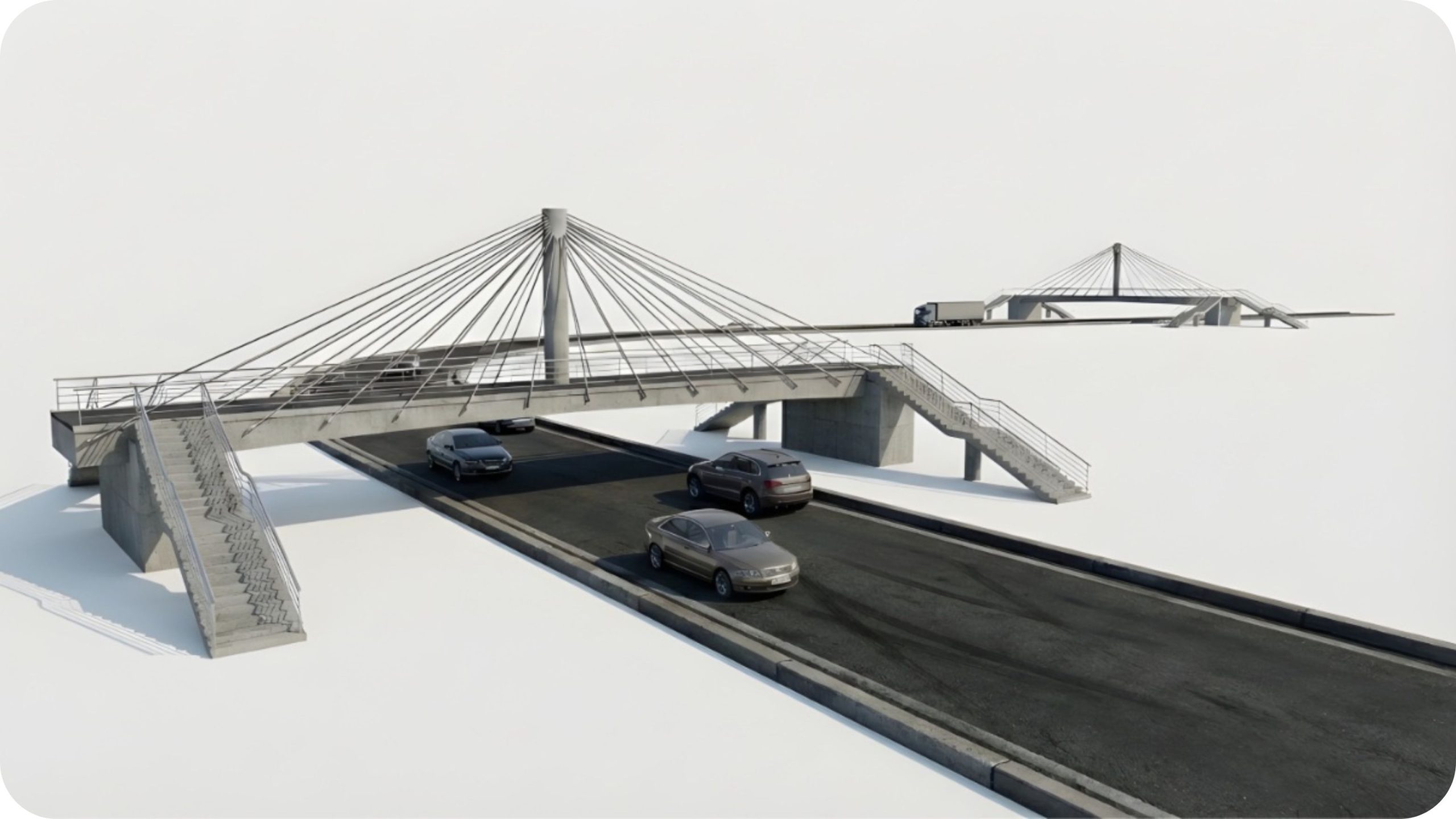
The Engineering Vision
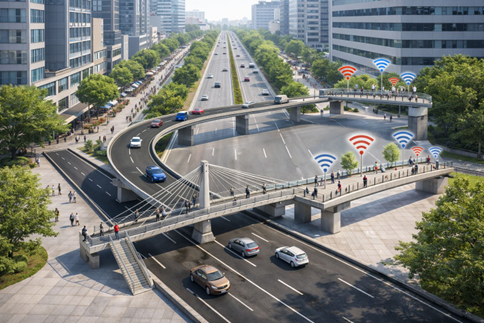
Efficient urban design depends on the seamless integration of high-capacity transit and pedestrian accessibility. Our project addresses the “Barrier Effect” created by major highways by developing an integrated corridor where vehicular and pedestrian systems are co-dependent. By treating these assets as a system-of-systems, we move beyond isolated models toward a unified, data-driven infrastructure assembly.
System Components
The model integrates five independently developed civil engineering modules:
- Three Road Segments: Standard Asphalt Pavement, Flexible Pavement, and a Curved Highway segment.
- Two Pedestrian Bridges: A Smart Pedestrian Bridge and a Cable-stayed system.
The Integrated Approach (Ontology and Dynamo)
To ensure these five products fit together perfectly in 3D space, we implemented a two-step modeling strategy:
- Ontological Modelling(Ontology): Using Protégé, we established a shared vocabulary and conceptual rules. This ensures that every module—regardless of its designer—uses the same naming conventions and structural logic for components like piles, decks, and asphalt layers.
- Parametric Modelling (Dynamo Workflow): Using Dynamo, we created a modular “chain” where data flows from one product to the next. Each module is placed using specific “Exit References,” allowing the highway to act as the organizing backbone for the bridges and local roads.