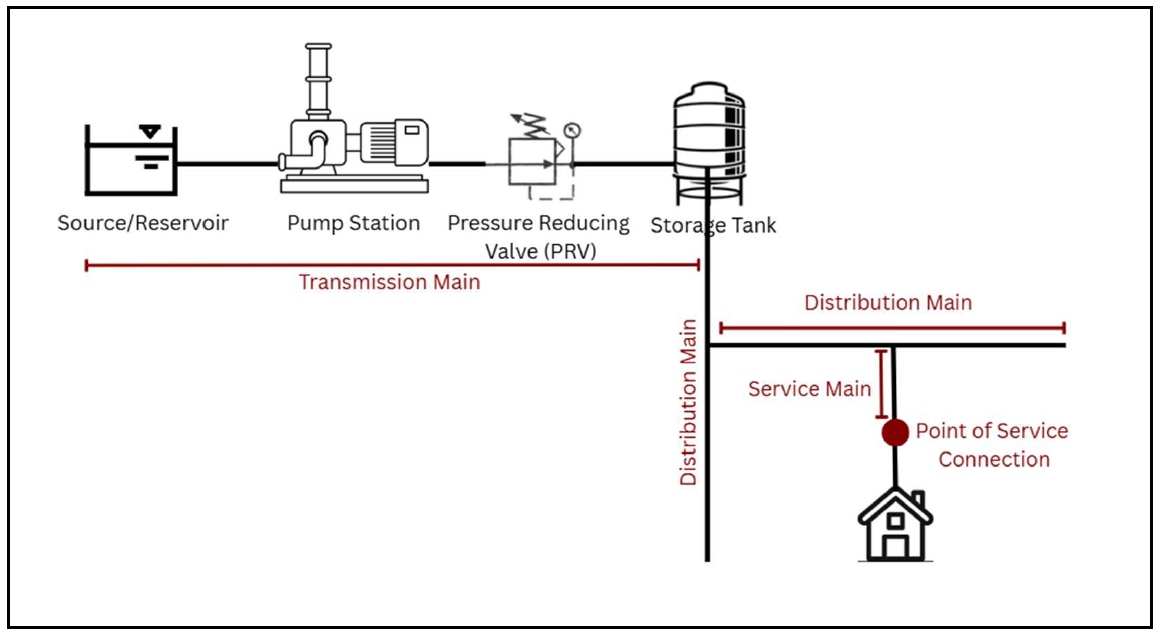
A water distribution pipeline system is an engineered network that delivers treated potable water from reservoirs to consumers through pipelines, valves, pumps and storage tanks. Germany’s water-supply systems are characterized by decentralized network design, high technical standards and compliance with DVGW (Deutscher Verein des Gas- und Wasserfaches) rules for pressure, quality and reliability.
1. Ontology
Purpose
To formally represent the structure, hydraulics and interrelations of waterdistribution components for design, simulation and asset management.
Scope
German municipal water networks including mains, valves, pumps, storage and service connections.
Intended Users
Civil/water engineers, planners, researchers and software developers building digital twins or parametric design tools.
Intended Use
To enable semantic data integration, hydraulic simulation (EPANET) and decision support for network performance and maintenance.
Ontology Structure
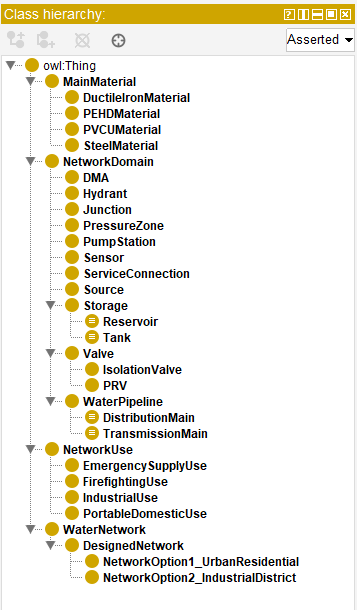
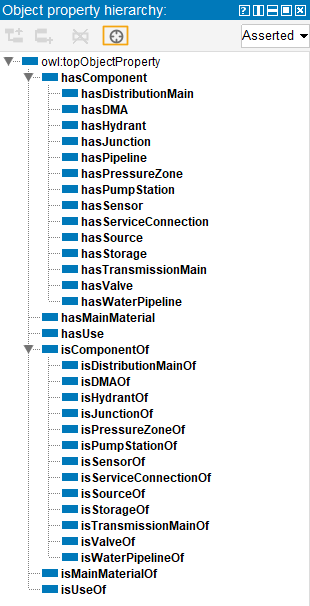
Design Options
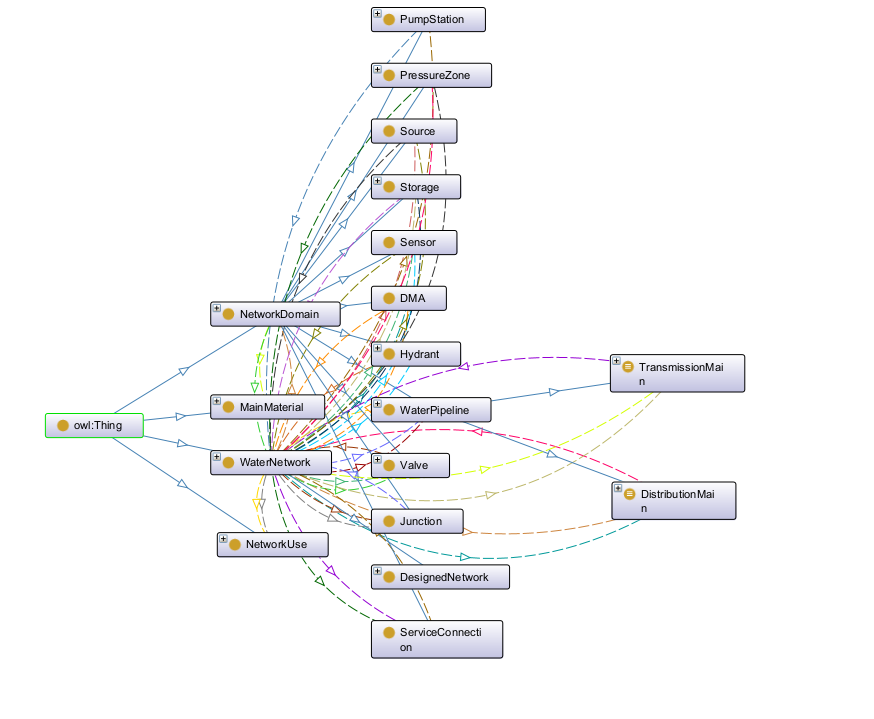
OntoGraf
OntoGraf provides a visual representation of how the integrated systems are connected.
Engineering Examples
- Hydraulic Simulation Support – Ontology data properties (flow, pressure, diameter) feed directly into EPANET for parametric simulation of network performance.
- Asset Management – Queries such as “Find all valves with setting pressure < 25 m” enable maintenance prioritization and leak-detection planning.
- Inter-system Integration – By connecting hasSource and hasStorage, the ontology interfaces with upstream treatment-plant models and downstream consumer-building ontologies, forming a digital-twin knowledge base.
2. Parametric Modelling
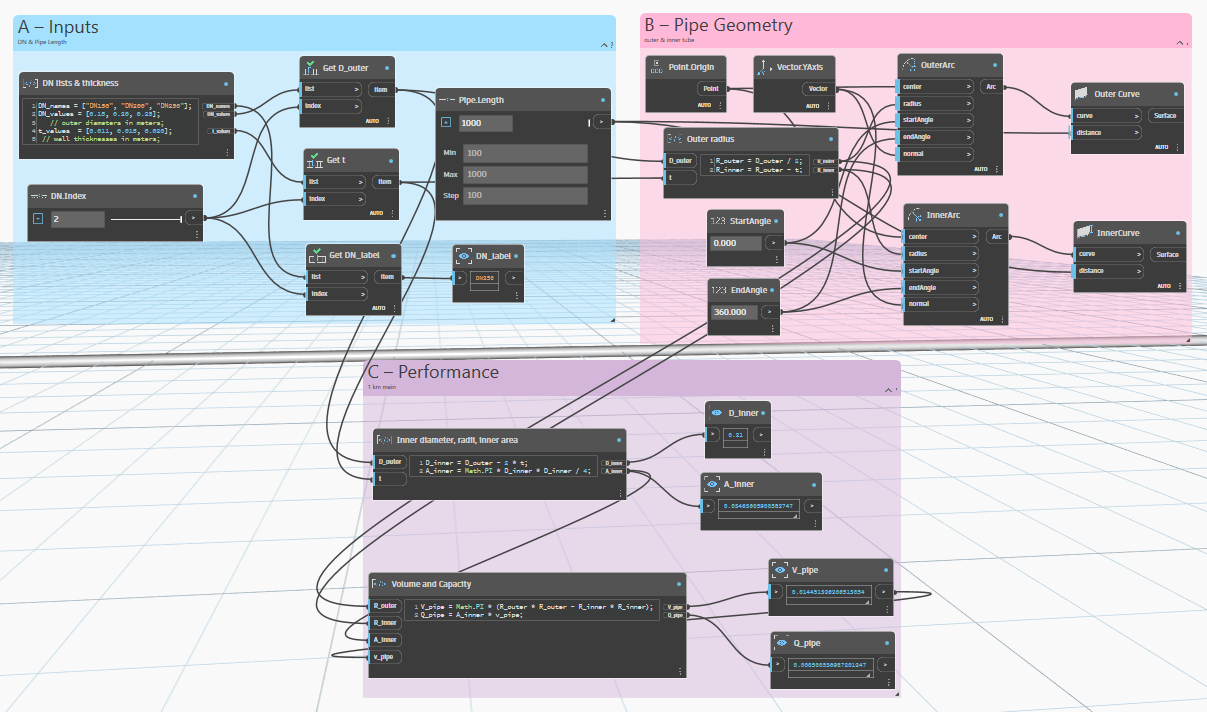
Using Dynamo BIM, the parametric model was developed to allow users to vary the pipe’s nominal diameter and wall thickness, automatically update the pipeline geometry and compute the associated performance metrics. This model will enable structured exploration of the design space, demonstrates how parametric modeling can enhance civil engineering workflows and supports engineering judgement.
Design Challenge Description
The design challenge is to identify appropriate pipe diameter and wall thickness that will result in sufficient hydraulic capacity for 1 km water main while minimizing material usage. The bigger the diameter, the higher the flow area but it requires more material. Meanwhile, thicker walls can improve structural resistance of the pipe but it will increase the weight and cost.
High Performance Criteria
Three performance criteria were chosen for the model:
- Hydraulic capacity (A_inner)
- Material volume for 1 km of Pipe (V_pipe)
- Pipe Flow Rate (Q_pipe)
Dynamo Parametric Model
The parametric model is structured into three parts which are part A, B and C. Part A defines the input parameters including the nominal diameter, wall thickness and pipe length. Part B generates the pipe geometry by calculating the outer diameter and inner radius based on the input values. Part C evaluates the pipe performance where the pipe volume and design flow rate (pipe capacity) are computed and compared.
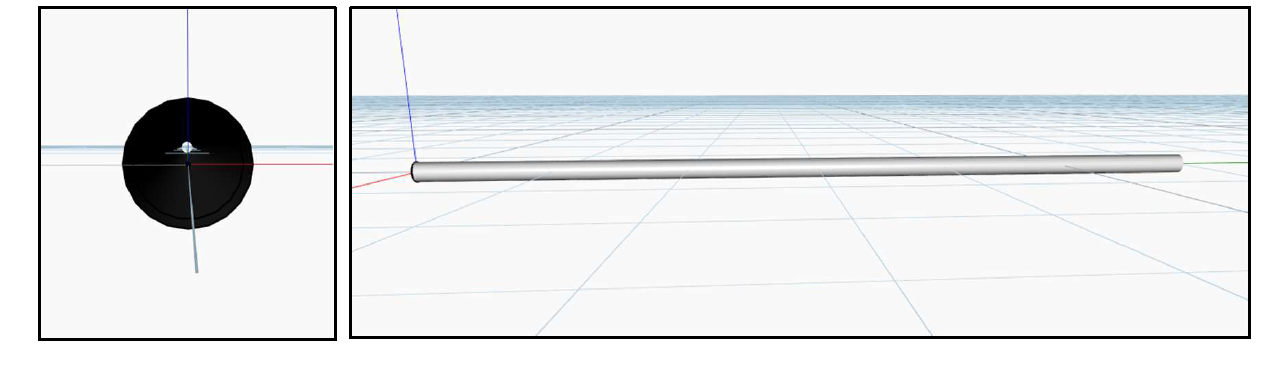
Figures below show the 3D pipe model and its circular cross-section generated in Dynamo.
Design Alternatives
There were 3 design alternatives taken into consideration for the water distribution main pipe which are 15, 200 and 250 nominal diameters.
| Alternative | DN | Din (m) | Inner Area(m2) | Pipe Volume (m3 per 1 km) | Pipe Flow Rate (m3/s) | Interpretation |
| 1 | DN150 | 0.128 | 0.013 | 4.803 | 0.062 | Lowest flow capacity with minimal material usage. Suitable for low-demand branches or secondary distribution lines. |
| 2 | DN200 | 0.170 | 0.023 | 8.718 | 0.198 | Moderate flow capacity with balanced material usage. Appropriate for typical distribution mains supplying critical buildings. |
| 3 | DN250 | 0.210 | 0.035 | 14.451 | 0.501 | High flow capacity with increased material usage. Suitable for trunk mains or emergency supply lines with high demand. |
Preferred Alternative
DN200 is identified as the best preferable design alternatives as it achieves a desirable balance between hydraulic capacity and material usage. The pipe size is sufficient to meet the required building demand while limiting material consumption, cost and environmental impact making it an appropriate choice for the emergency water supply system.