1. Introduction to the Road Slab System
A road slab system is a structural pavement system designed to distribute traffic loads safely to the subgrade while maintaining serviceability, durability, and ride quality throughout its design life. Unlike flexible pavements, road slab systems, typically concrete-based, exhibit high structural rigidity, making them suitable for highways with heavy traffic loads and long service life requirements.
From a systems engineering perspective, a road slab system consists of multiple interacting layers: surface asphalt or wearing course, structural concrete slab, reinforcement or composite materials, subbase, and subgrade. Its performance is governed not only by material properties but also by maintenance strategies, environmental exposure, and probabilistic deterioration behaviour over time.
This integrated assessment combines:
- Life-Cycle Sustainability and Cost Evaluation
- Risk-based Reliability and Deterioration Modeling
Together, these approaches allow both design optimization and long-term maintenance planning.
2. System Configuration and Design Alternatives
Theory
Different road slab configurations lead to fundamentally different environmental impacts, durability, and maintenance needs. Modern infrastructure design increasingly compares alternatives not only by initial cost but also by whole-life performance.
Three structural alternatives are evaluated over a 30-year service life for a 1 km, four-lane road section:
• Cast-in-place Reinforced Concrete (RC)
• Precast Reinforced Concrete (PRC)
• Hybrid Precast–FRP Composite (PRCFRP)
These alternatives vary in slab thickness, reinforcement type, and asphalt surface requirements.
Table: Dimensions of the analyzed road section
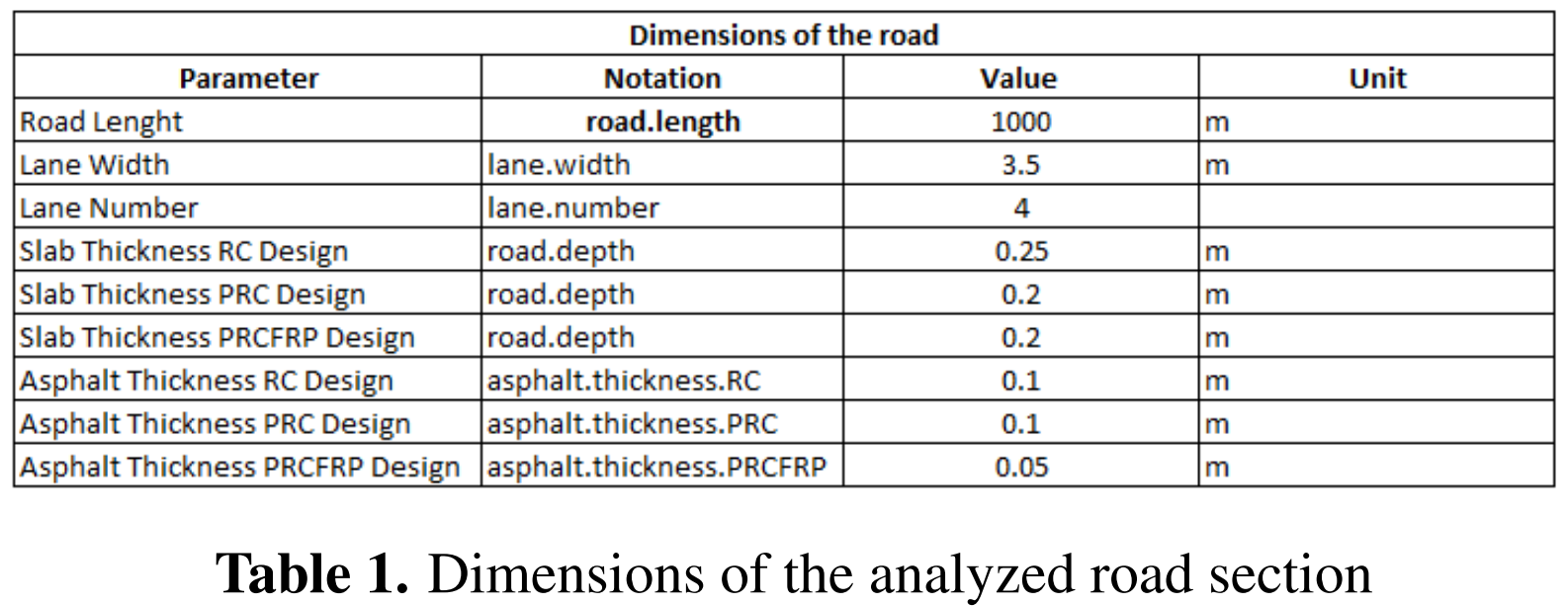
This table defines:
- Lane width
- Slab thickness for each system
- Asphalt layer thickness
- Road length and width
3. Life-Cycle Boundary and Assessment Framework
Theory
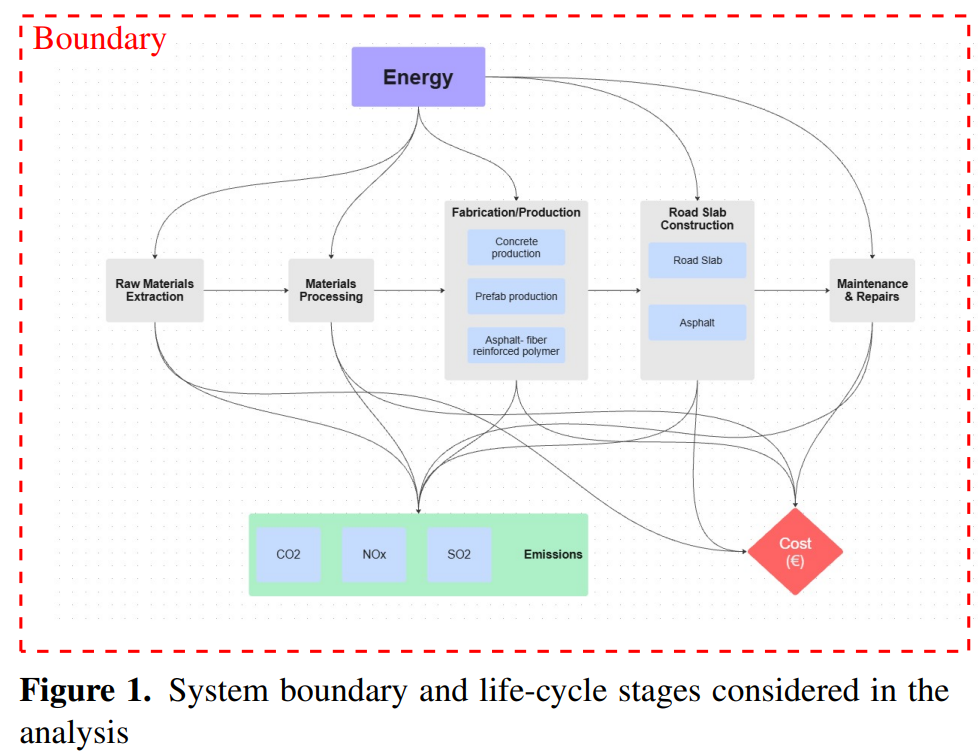
Life-Cycle Assessment (LCA) evaluates environmental and economic impacts from raw material extraction to end of service life, ensuring decisions are not biased toward short-term benefits. In road infrastructure, maintenance and repair activities significantly influence total emissions and cost.
The adopted boundary follows a “cradle to end-of-life (without demolition)” approach, focusing on:
- Material production
- Construction
- Maintenance and repair
- Operational phase (30 years)
Figure: System boundary and life-cycle stages
4. Maintenance Strategy and Intervention Modeling
Theory
Maintenance frequency directly affects both environmental burden and life-cycle cost. Systems requiring frequent interventions accumulate emissions and costs even if their initial construction footprint is lower.
Maintenance actions modelled include:
- Maintenance (M)
- Shallow Deck Overlay (SDO)
- Partial Replacement (PR)
- Slab Replacement (SR)
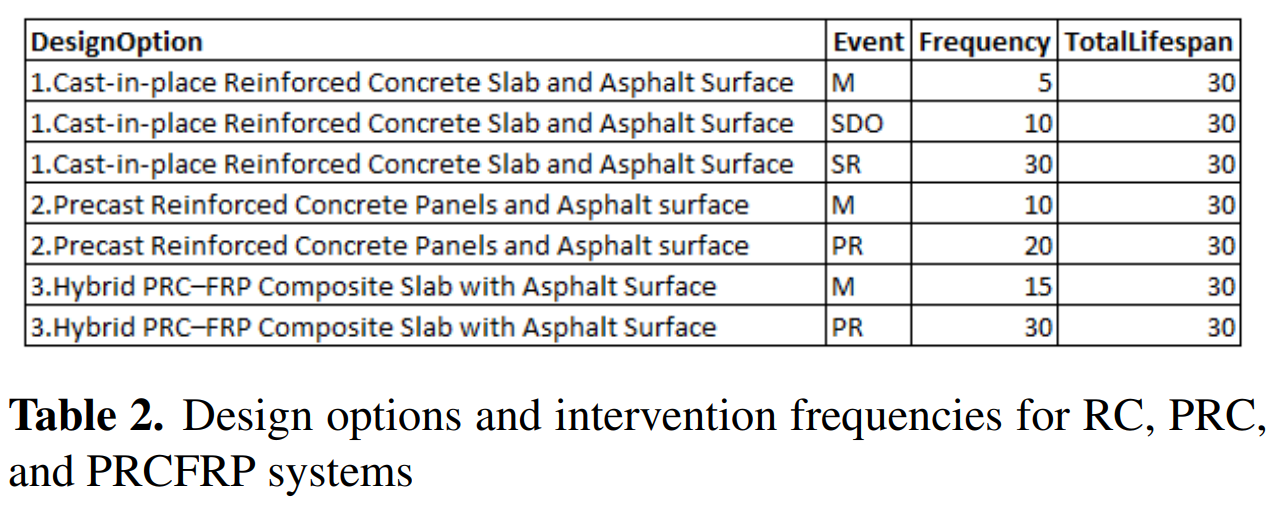
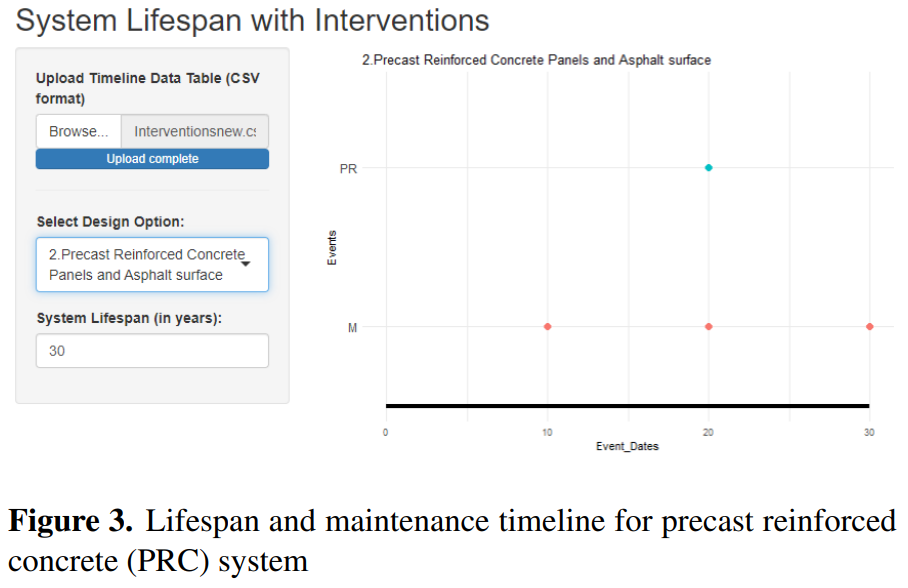
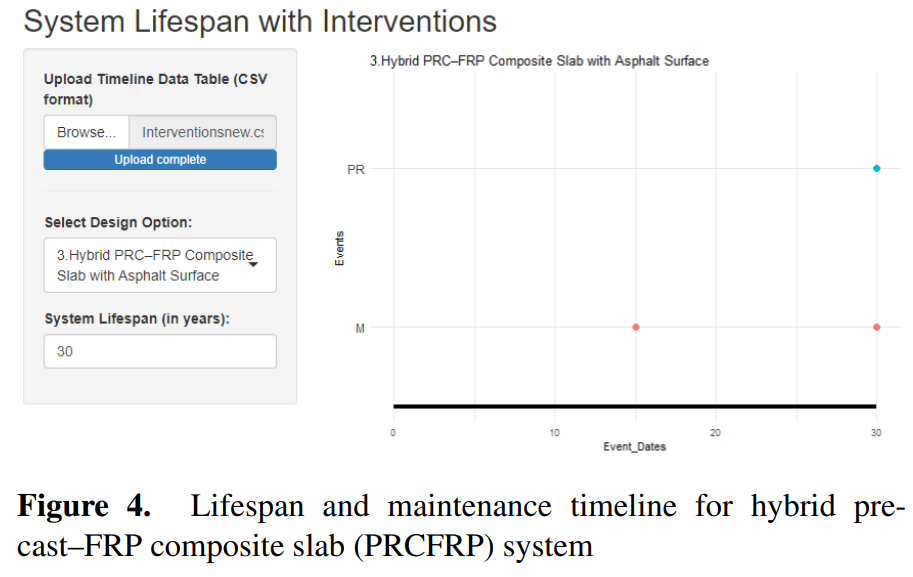
RC systems require the most frequent interventions, while PRCFRP systems require the least due to superior material durability.
Table: Design options and intervention frequencies
Figures:
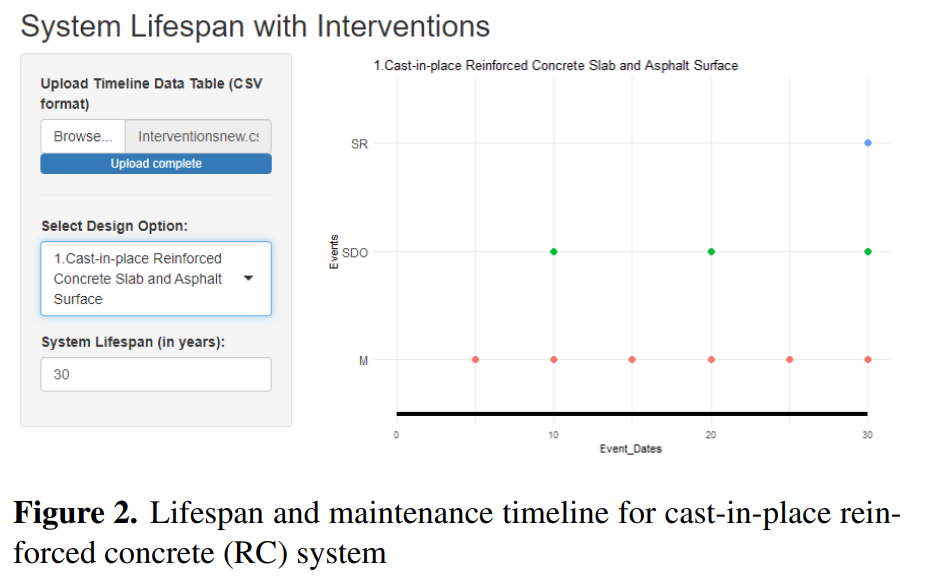
Maintenance timelines (visual comparison):
- Figure 2 – RC system
- Figure 3 – PRC system
- Figure 4 – PRCFRP system
5. Environmental Performance Analysis (LCA Results)
5.1 Energy Consumption
Theory
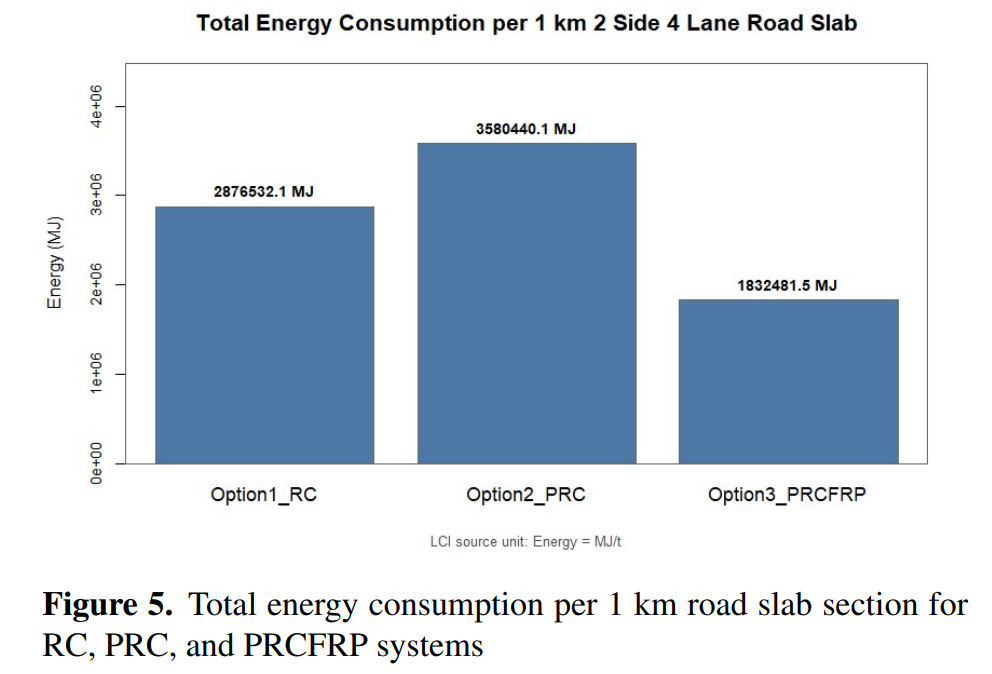
Energy consumption reflects embodied energy in materials and recurring energy use from maintenance. Lower intervention frequency and reduced material demand significantly reduce total energy demand.
Total energy consumption per system
5.2 CO₂ Emissions
Theory
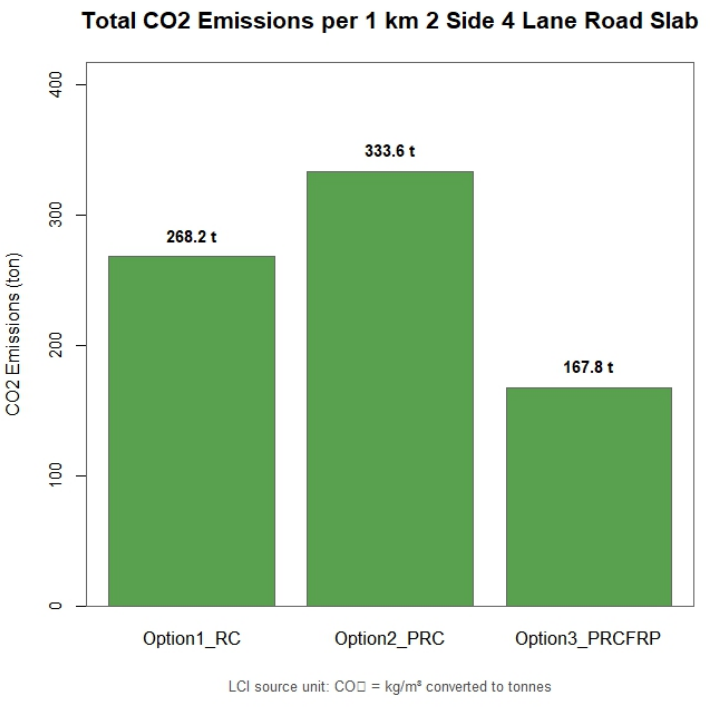
CO₂ emissions correlate strongly with cement production, steel reinforcement, and repeated repair activities. Systems with fewer interventions show a clear long-term carbon advantage.
Total CO₂ emissions per system
5.3 NOₓ and SO₂ Emissions
Theory
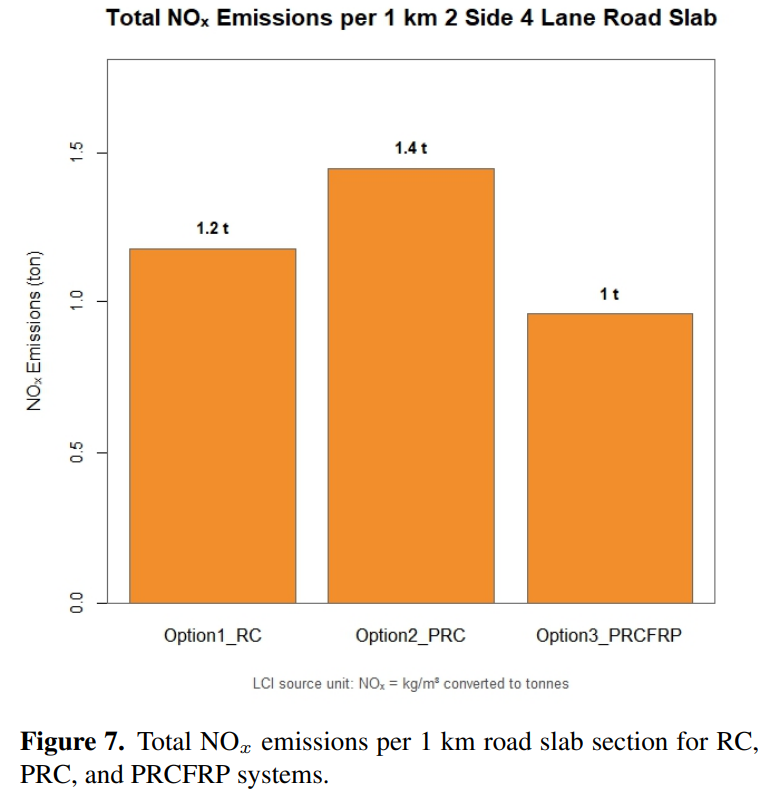
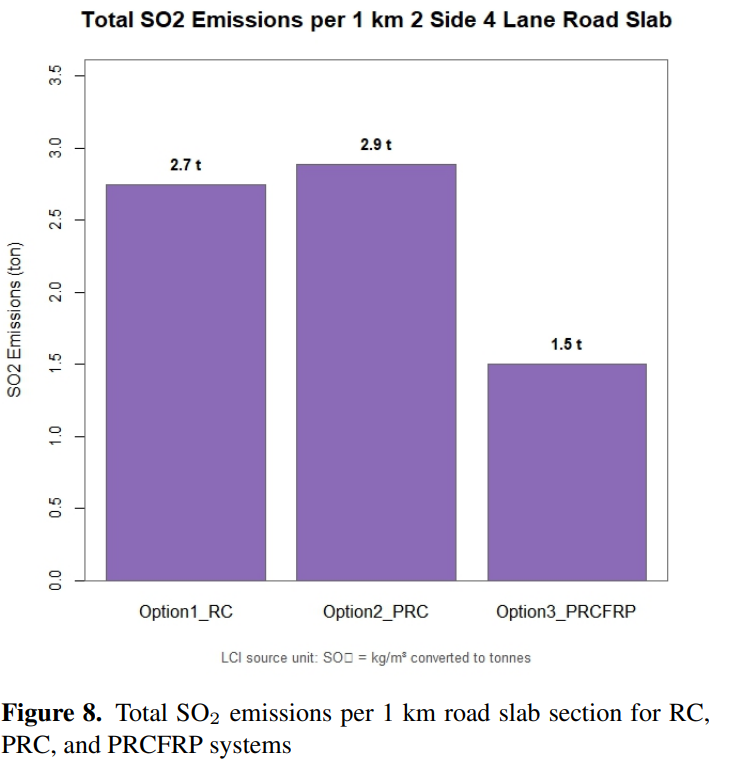
NOₓ and SO₂ emissions affect local air quality and human health. While weighted lower than CO₂, they remain critical for environmental compliance in urban and regional planning.
- NOₓ emissions
- SO₂ emissions
6. Life-Cycle Cost Analysis (LCCA)
Theory
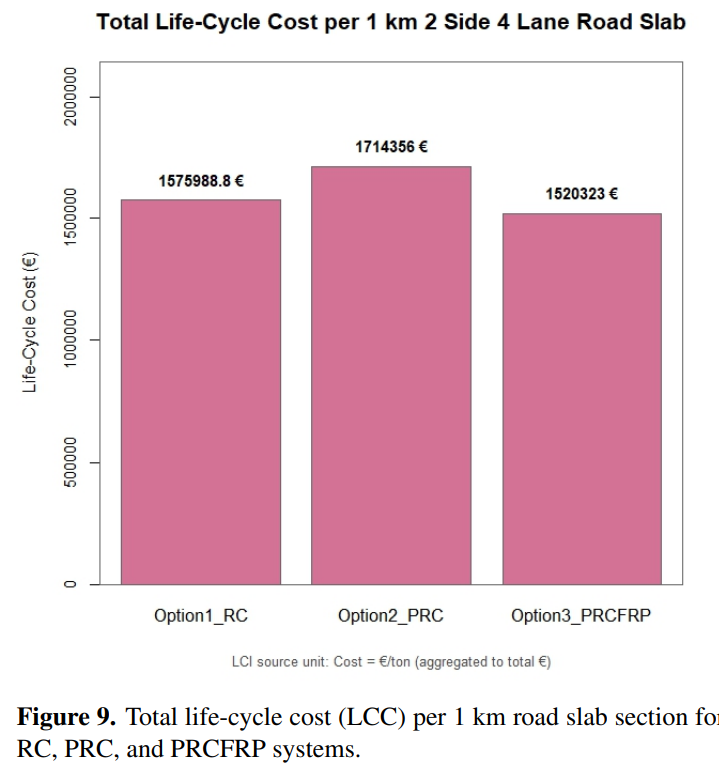
Life-cycle cost integrates initial construction cost with long-term maintenance and repair expenses. A higher initial investment can be economically justified if it minimises future interventions.
Total life-cycle cost comparison
7. Multi-Criteria Decision Making (AHP)
Theory
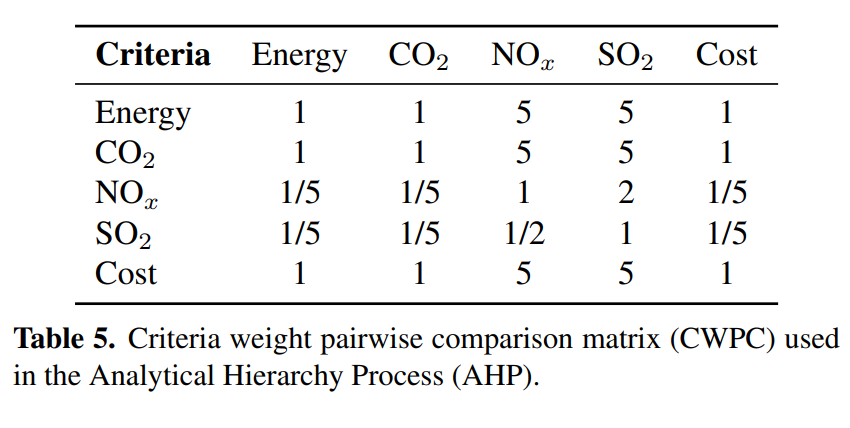
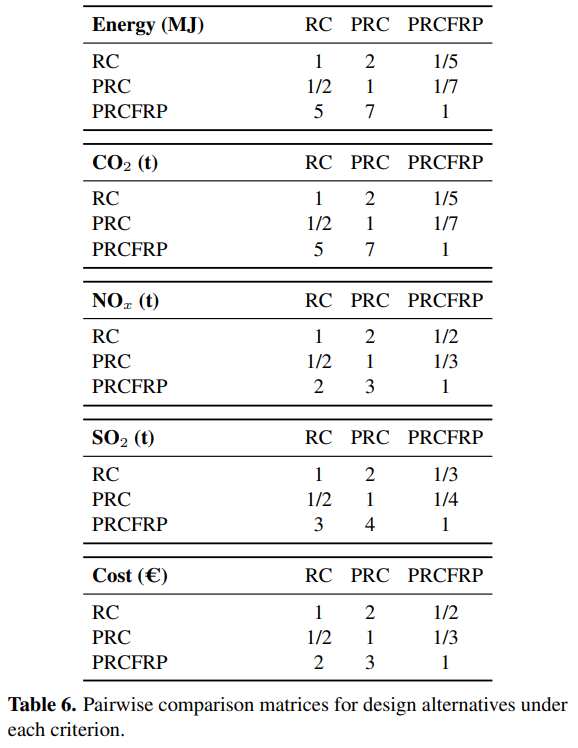
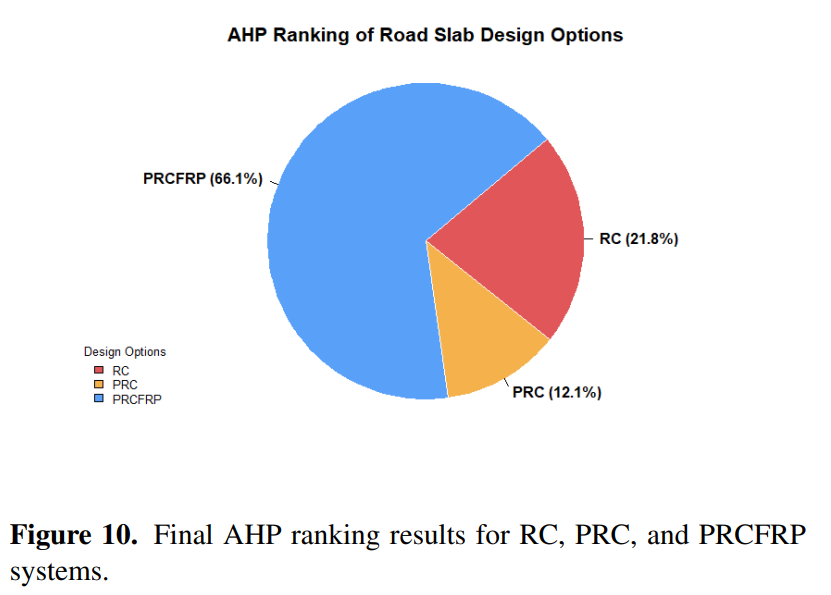
Infrastructure decisions involve trade-offs between environmental impact, cost, and durability. The Analytical Hierarchy Process (AHP) provides a structured method to assign weights to each criterion and rank alternatives objectively.
Criteria considered:
- Energy
- CO₂
- NOₓ
- SO₂
- Cost
- Criteria weight matrix
- Pairwise comparison matrices
Final AHP ranking
8. Risk-Based Deterioration and Reliability Assessment
Theory
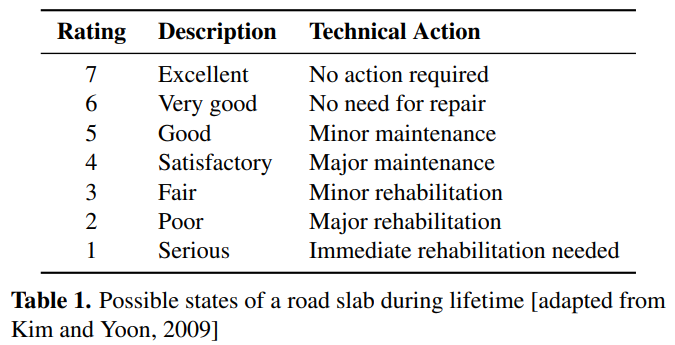
Deterministic models cannot capture real-world pavement uncertainty. Probabilistic models such as Markov Chains simulate gradual deterioration, while Fault Tree Analysis (FTA) explains how failures occur.
Table
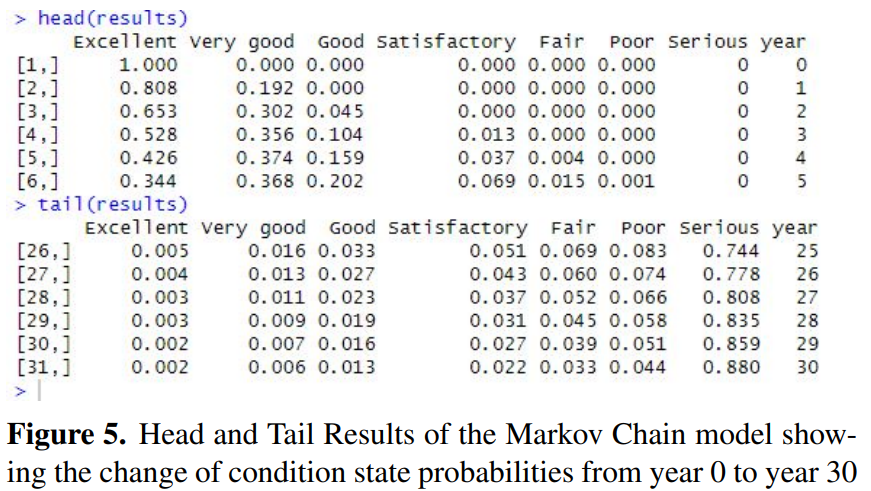
9. Probabilistic Deterioration Modeling (Markov Chain)Theory
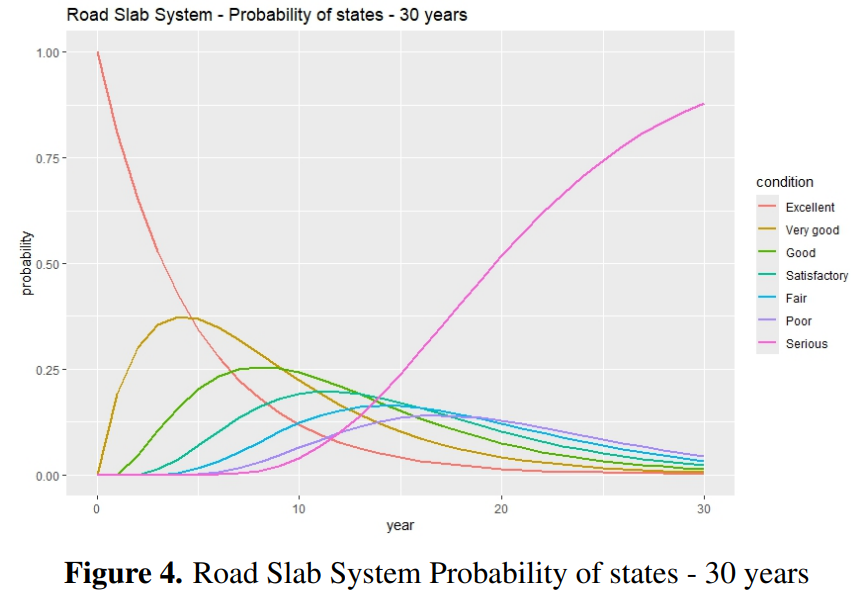
Markov models represent pavement condition transitions between discrete states over time. This enables prediction of serviceability loss and optimization of maintenance timing.
Figures
- Probability of states over 30 years
- Head & tail probability results
10. Fault Tree Analysis and Failure Risk
Theory
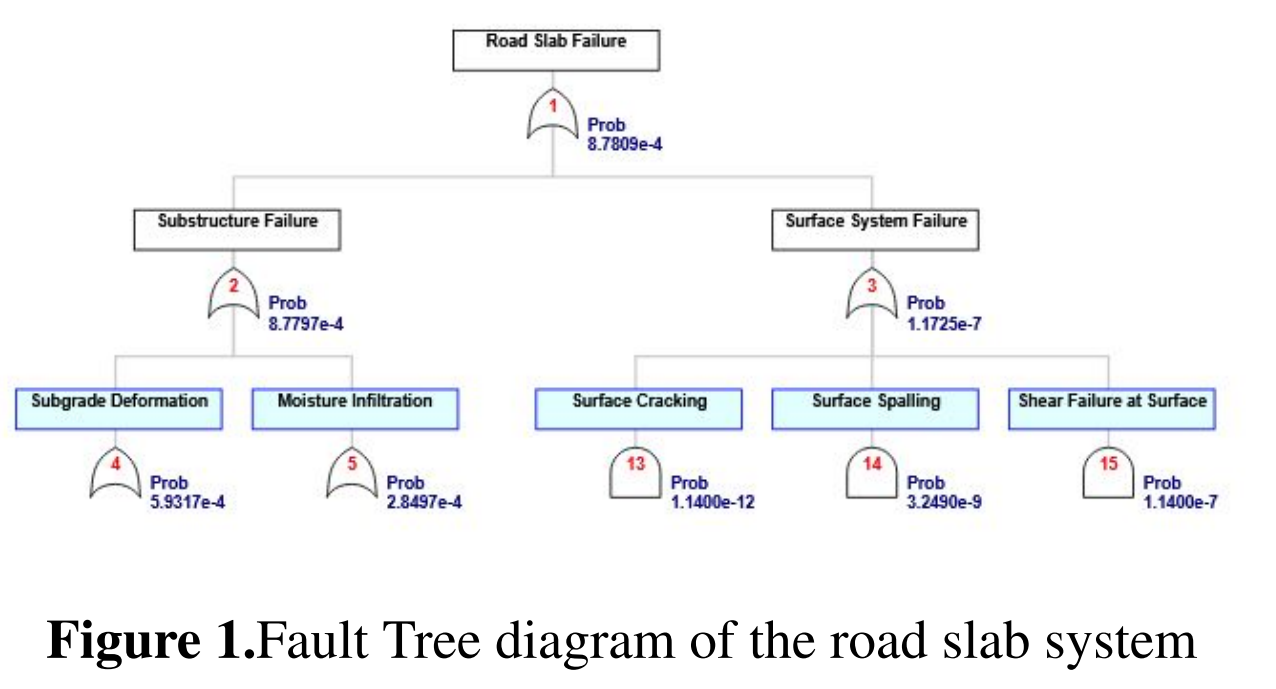
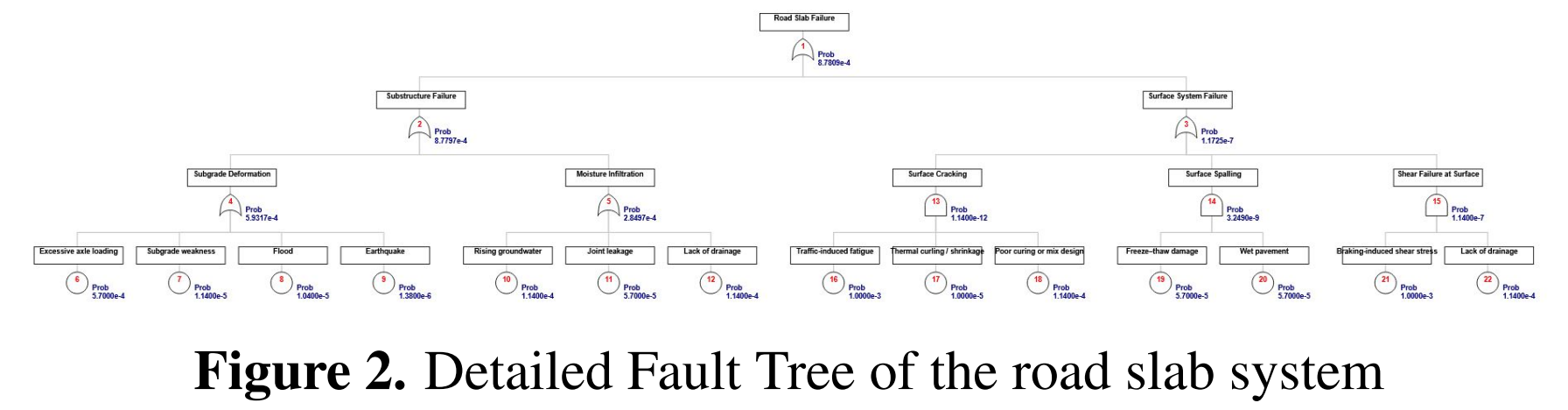
Fault Tree Analysis identifies root causes of failure, linking subgrade deformation, moisture infiltration, cracking, and material defects into a logical failure structure.
- Fault Tree diagram
- Detailed Fault Tree
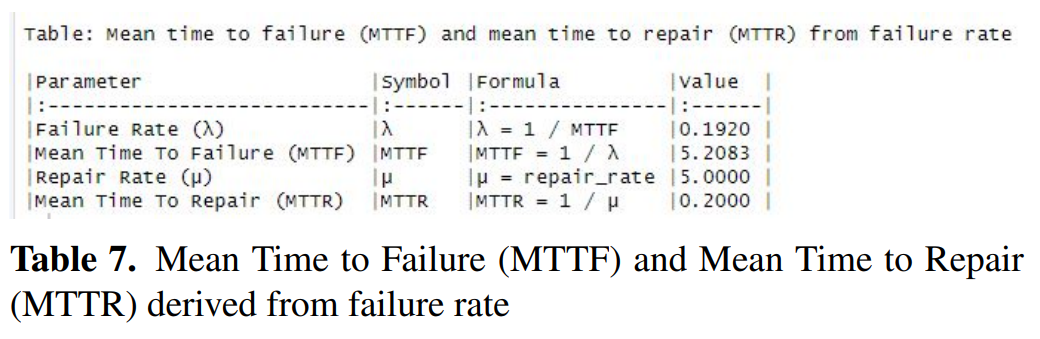
11. Reliability Indicators (MTTF & MTTR)
Theory
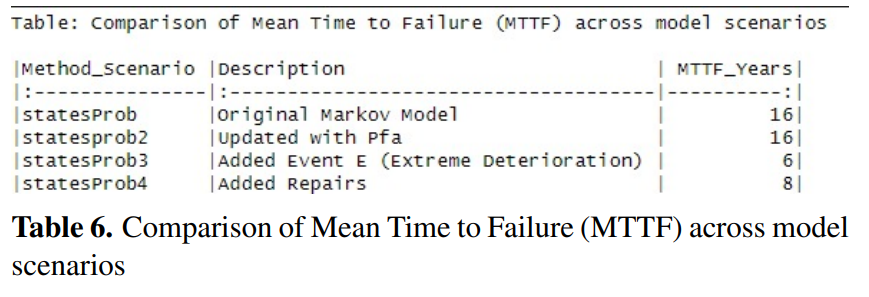
Mean Time to Failure (MTTF) and Mean Time to Repair (MTTR) quantify system reliability and availability. These metrics translate probabilistic behavior into actionable maintenance planning parameters.
- MTTF comparison across scenarios
- MTTF & MTTR from failure rate
12. Value of Information (VOI) in Maintenance Decisions
Theory
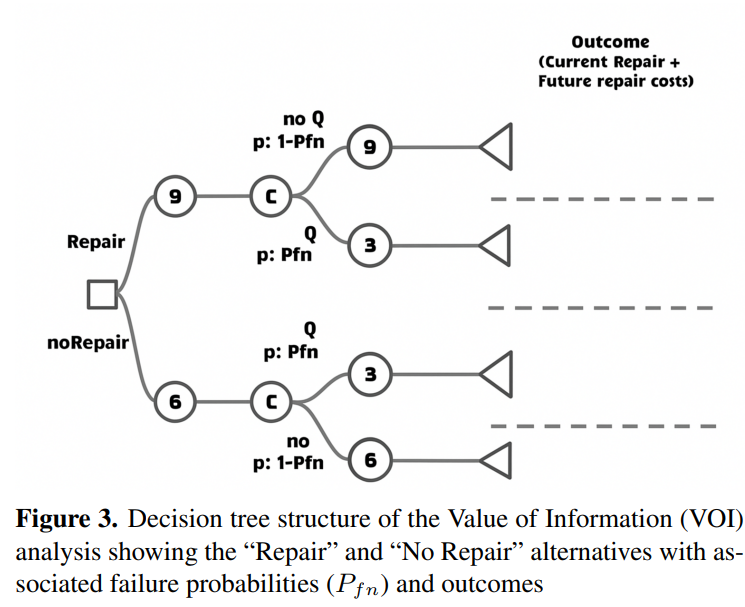
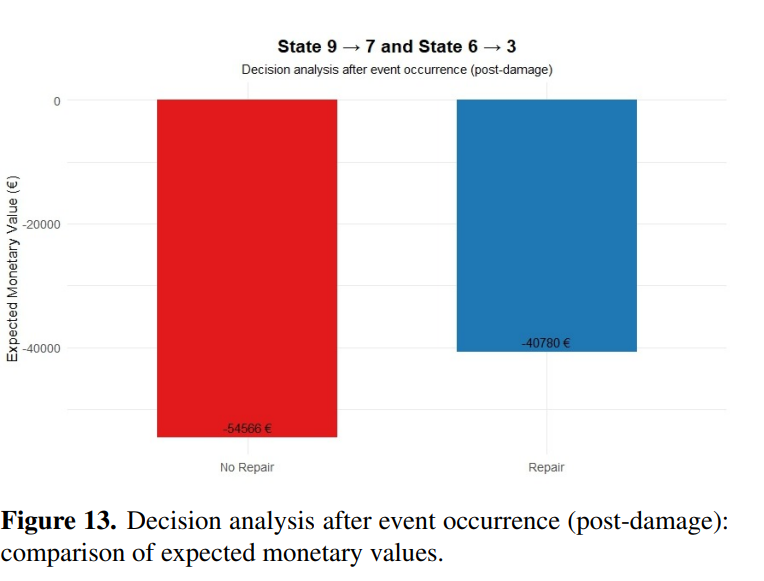
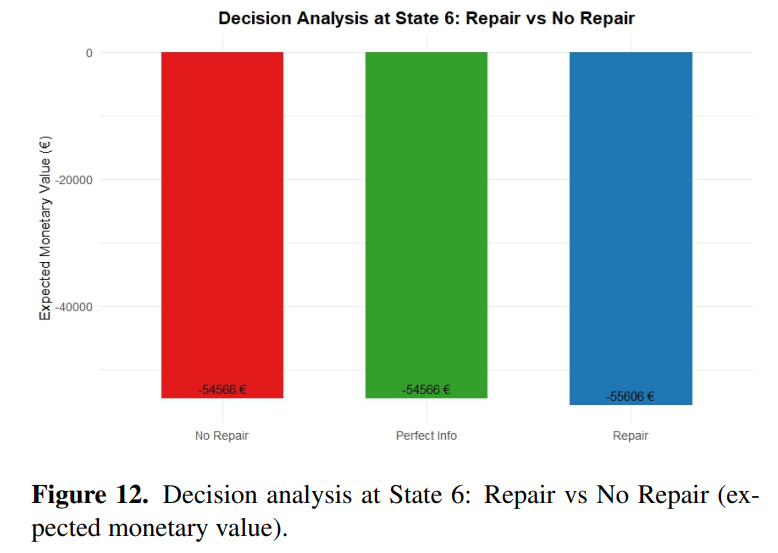
VOI measures the economic benefit of better inspection and data quality. Early, informed repair decisions can significantly reduce long-term costs under extreme deterioration scenarios.
- Decision tree structure
- Repair vs No-Repair cost comparison
13. Integrated Conclusion
By merging life-cycle sustainability assessment with probabilistic reliability modeling, this integrated system analysis demonstrates that:
• PRCFRP systems provide the best overall sustainability and reliability
• RC systems offer cost-balanced solutions under budget constraints
• Risk-based models are essential for realistic long-term infrastructure planning
This combined framework supports evidence-based decision-making across design, maintenance, and policy levels.
References:
- ISO. (2006). ISO 14040:2006 — Environmental management: Life cycle assessment — Principles and framework. International Organization for Standardization, Geneva.
- ISO. (2006). ISO 14044:2006 — Environmental management: Life cycle assessment — Requirements and guidelines. International Organization for Standardization, Geneva.
- Harvey, J. T., Meijer, J., Ozer, H., Al-Qadi, I. L., Saboori, A., & Kendall, A. (2016). Pavement Life-Cycle Assessment Framework (FHWA-HIF-16-014). Federal Highway Administration (FHWA), U.S. Department of Transportation.
- Walls, J., & Smith, M. R. (1998). Life-Cycle Cost Analysis in Pavement Design (FHWA-SA-98-079). Federal Highway Administration (FHWA), U.S. Department of Transportation.
- Transportation Research Board (TRB). (1993). AASHTO Guide for Design of Pavement Structures. American Association of State Highway and Transportation Officials (AASHTO), Washington, DC.
- Transportation Research Board (TRB), National Cooperative Highway Research Program (NCHRP). (2004). NCHRP Report 523: Optimal Timing of Pavement Preventive Maintenance Treatment Applications. National Academies Press, Washington, DC.
- Burr, A. A., Shahin, M. Y., & Feighan, K. J. (1987). Pavement performance prediction model using the Markov process. Transportation Research Record, 1123.
- George, K. P. (1987). Using the Markov process as a pavement management tool. Transportation Research Record, 1123.
- IEC. (2006). IEC 61025:2006 — Fault Tree Analysis (FTA). International Electrotechnical Commission, Geneva.
- Saaty, T. L. (1980). The Analytic Hierarchy Process: Planning, Priority Setting, Resource Allocation. McGraw-Hill, New York.
- Ben-Haim, Y. (2006). Info-Gap Decision Theory: Decisions Under Severe Uncertainty. Academic Press.
- Federal Highway Administration (FHWA). (2002). Construction of Pavement Subsurface Drainage Systems. U.S. Department of Transportation.