Elevated Water Tank Staging System
The staging/columns subsystem of elevated potable water tanks is a critical structural component that ensures stability, load transfer, and long-term serviceability of municipal water infrastructure. As these structures are designed for multi-decade lifespans and are exposed to environmental deterioration mechanisms such as carbonation, moisture ingress, and reinforcement corrosion, material selection and maintenance strategy strongly influence environmental performance, durability, and lifecycle impacts.
Different staging solutions vary significantly in embodied energy, greenhouse gas emissions, maintenance intensity, and long-term resilience. A life-cycle–based comparison therefore provides a more meaningful basis for sustainable design decisions than an assessment limited to initial construction impacts alone, particularly for municipal infrastructure with long design horizons [1], [2].
Design Options Considered
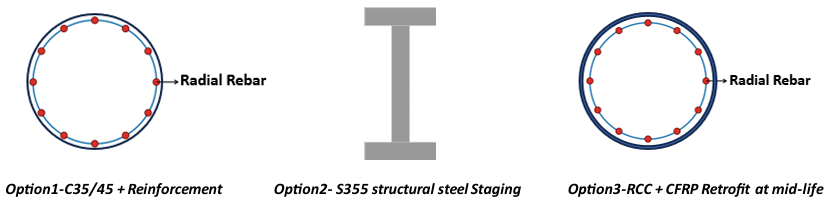
- Option 1 – Conventional RCC columns:
Reinforced concrete columns using C35/45 concrete and embedded steel reinforcement, representing standard practice for elevated water tanks. - Option 2 – Steel staging:
Structural steel columns (S355), characterized by lower initial CO₂ emissions but higher maintenance requirements due to corrosion protection needs. - Option 3 – RCC columns with CFRP retrofit:
Reinforced concrete columns strengthened at mid-life using carbon fiber reinforced polymer (CFRP) to extend serviceability and reduce major repair needs.
Life-Cycle Assessment Results and Preferred Option
The life-cycle assessment was conducted for a 50-year service life, using a cradle-to-gate material inventory combined with scheduled maintenance and rehabilitation interventions. The results show that the environmental performance of the staging system is governed by a trade-off between production-phase impacts and maintenance-driven impacts over the operational phase.
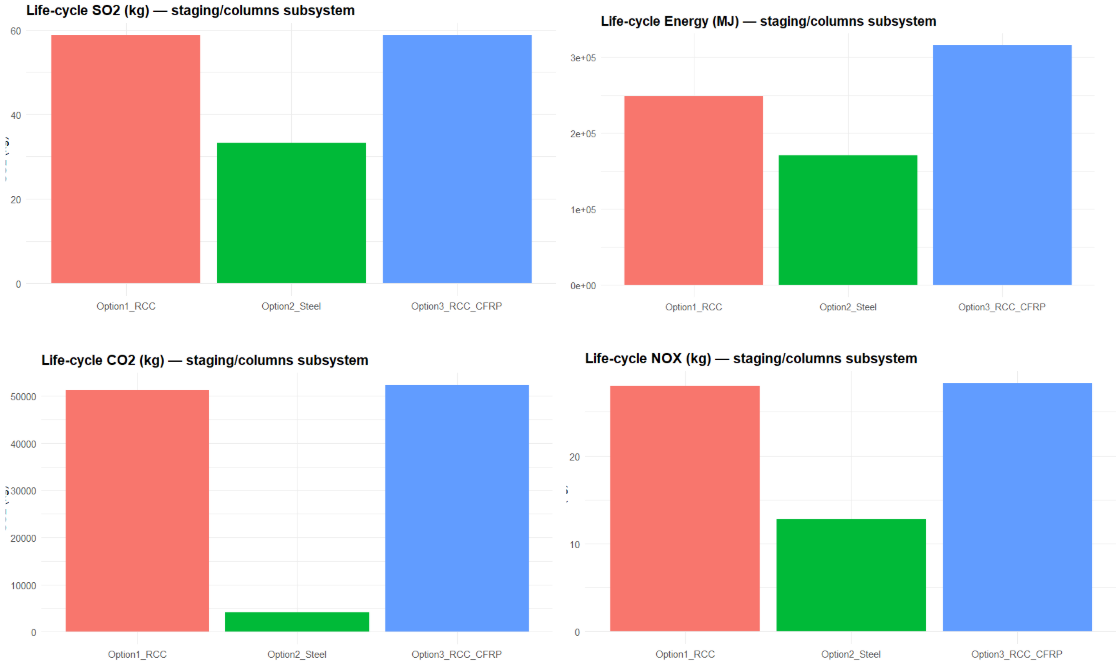
Figure-1 Energy Consumption, CO2, NOX and SO2 emissions of different design options
Steel staging (Option 2) exhibits comparatively low total CO₂ emissions in the applied inventory due to lower concrete use; however, frequent recoating, inspections, and anticipated partial replacements increase maintenance-related impacts and reduce long-term robustness. Conventional RCC columns (Option 1) show higher production-phase CO₂ emissions dominated by cement production, but benefit from longer maintenance intervals and stable long-term performance. The RCC + CFRP retrofit option (Option 3) has the highest primary energy demand due to the energy-intensive production of CFRP materials, yet it significantly reduces repair intensity after mid-life and improves durability under aggressive exposure conditions [3], [4].
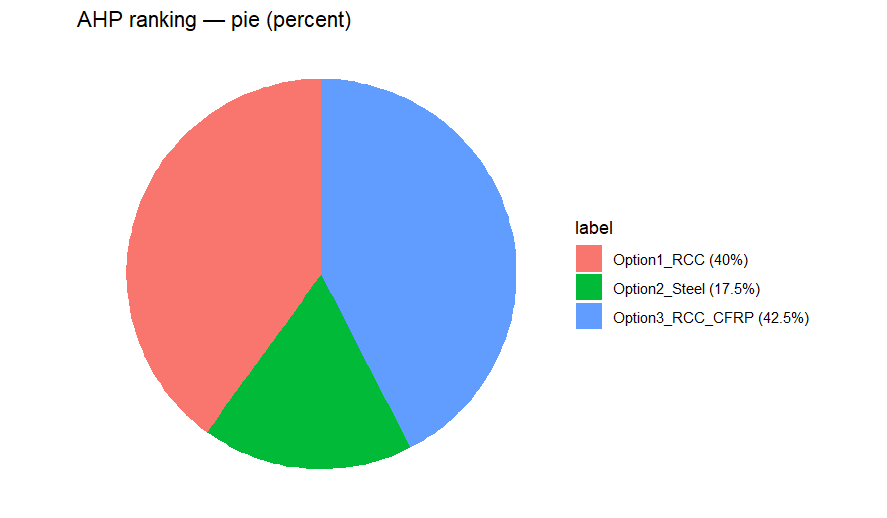
Figure 5 AHP Ranking for different design options
When aggregated using a multi-criteria decision-making framework (Analytic Hierarchy Process), Option 3 achieves the highest overall score (0.425), marginally outperforming conventional RCC (0.400) and clearly outperforming steel staging (0.175). This ranking reflects the weighting of CO₂ emissions and long-term reliability as dominant decision criteria and highlights the benefit of planned mid-life strengthening in extending service life and reducing cumulative intervention impacts [5].
Accordingly, Option 3 (RCC columns with CFRP retrofit) is selected as the preferred design alternative, and only its constituent materials and interventions are included in the final life-cycle inventory for the integrated system analysis.
References
[1] ISO, ISO 14040: Environmental management – Life cycle assessment – Principles and framework. International Organization for Standardization, 2006.
[2] International Federation for Structural Concrete (fib), fib Model Code 2010 – Final draft. Lausanne, Switzerland, 2010.
[3] World Steel Association, Life Cycle Inventory Data for Steel Products. Brussels, Belgium, 2020.
[4] fib, Bulletin on FRP Reinforcement and Strengthening of Concrete Structures. fib Bulletin, Lausanne, Switzerland.
[5] T. L. Saaty and L. G. Vargas, Models, Methods, Concepts & Applications of the Analytic Hierarchy Process, 2nd ed. New York: Springer, 2012.
Home | Roads | Sewer Pipeline | RCC Tank | Warehouse | Residential Home Foundation