Introduction:
The chosen system was a highway pavement system, which forms part of the transportation infrastructure and is a component of the integrated civil system. The primary function of the system is to provide a safe and durable driving service in addition to distributing the traffic load to the underlying layers exposed to lateral forces, braking forces, and uneven distribution of loads due to the curvature it has. As a result, it can deteriorate more quickly than a straight system of the same length. It is composed of various layers, such as surface base, sub-base cores, and sub-grade.
Sub-system: Asphalt Surface Course:
I selected this subsystem for three main reasons. First of all, during the life cycle of a pavement, the asphalt layer requires regular maintenance. Secondly, the layer itself has a lot of energy demands and also various material components. Last but not least, according to Santero et al. (2011), the contribution of the asphalt to long term environmental impacts is excessive. The goal of this assessment is to compare the environmental performances of three distinct designs for the surface course layer of an asphalt pavement. The design options that were selected are commonly used pavement mixtures with differences in production temperature and material composition.
Environmental Impact:
Three design options for the asphalt course were considered to evaluate the differences in environmental impact
- Hot Mix Asphalt (HMA)
- Warm Mix Asphalt (WMA)
- 30% Reclaimed Asphalt Pavement (RAP30)
The environmental impact of the three design options was done using a total life cycle energy consumption and emissions of CO2, SO2 and NOx.
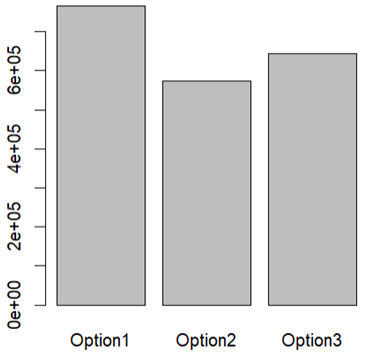
Figure 1: Energy Consumption for every Design Option
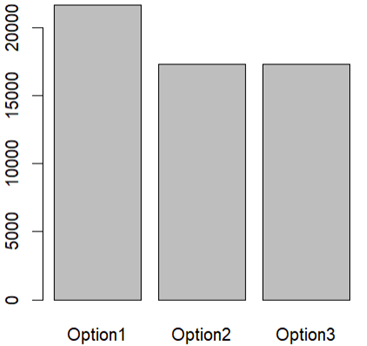
Figure 2: CO2 Emissions
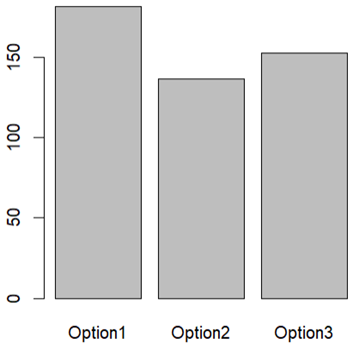
Figure 3: NOx Emissions
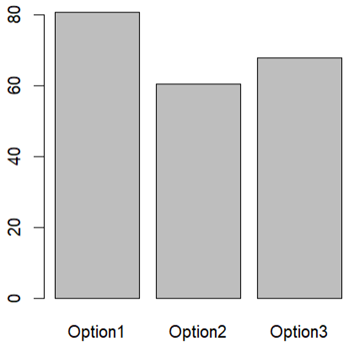
Figure 4: SO2 Emissions
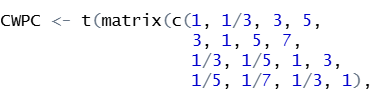
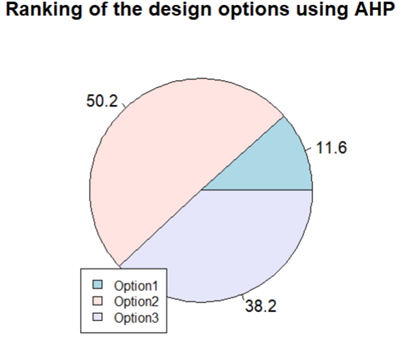
The last step of this life-cycle assessment was to make a Multi-Criteria Decision Method using an Analytic Hierarchy Process, in order to determine the most optimal design choice between HMA, WMA and RAP30. For this, I deemed the environmental impacts as the most important criteria.The four environmental indicators (Energy consumption, CO2, NOx, SO2) were defined by importance following the tutorial structure as well as the Saaty scale (Saaty, 1980) where:
- 1 = equal importance
- 2, 3 = moderate importance
- 4, 5 = strong importance
- 7 = very strong importance
- 1/3, 1/5, etc are less important
Since the objective of this method aims to improve the environment, and CO2 emissions are the main factor of environmental change, it was given the greatest weight, followed by energy consumption. NOx and SO2 emissions have less weight considering the small variations in the LCA alternatives.
Results:
In terms of engineering design, this assessment’s outcome indicates the superiority of the Warm Mix Asphalt option, specifically because of the reduced temperatures that are involved in the production process. These temperatures influence the lower use of energy and contribute to the conclusion that WMA has the lowest environmental impact, thus being the best option for these criteria. On the other hand, while using RAP30 as a design option had positive attributes related to the environmental aspect, the performance depends on the quality of the reclaimed asphalt, therefore making this method not the safest bet. The least favourable option was the Hot Mix Asphalt because its environmental impact was the highest since the temperatures and energy consumption during the mixing process are a lot higher than the other two design options.
References:
1.AASHTO, 2018. Pavement Management Guide (2nd ed.). American Association of State Highway and Transportation Officials, Washington, D.C.
2.BitRoads. 2022. Average Maintenance and Rehabilitation Costs for Asphalt Pavements in Germany. BitRoads Pavement Management Report, Berlin.
3.FHWA. 2011. Pavement Health and Maintenance Guidelines. Federal Highway Administration, Washington, D.C.
4.Santero, N.J., Masanet, E., & Horvath, A. 2011. Life-cycle Assessment of Pavements. A Critical Review of Existing Literature. Lawrence Berkeley National Laboratory, Berkeley.
5.ISO. 2006. ISO 14040: Environmental Management – Life Cycle Assessment – Principles and Framework. International Organization for Standardization, Geneva.
6.ISO. 2006. ISO 14044: Environmental Management – Life Cycle Assessment – Requirements and Guidelines. International Organization for Standardization, Geneva.
7.Saaty, T.L. 1980. The Analytic Hierarchy Process. McGraw-Hill, New York.
Next >