Focus
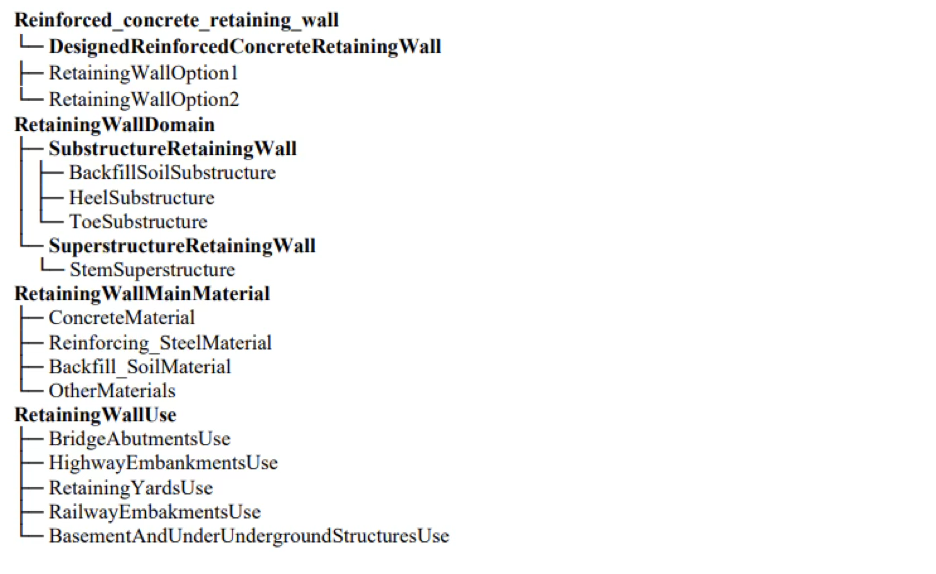
This work presents the development of a structured ontological model for reinforced concrete cantilever retaining walls, capturing their geometric configuration, material characteristics, geotechnical parameters, and areas of application within a single semantic framework.
Objective
The primary objective was to establish a reusable and interoperable knowledge model that enables systematic comparison of alternative retaining wall designs while improving the consistency and traceability of engineering data across the structure’s life cycle.
Method
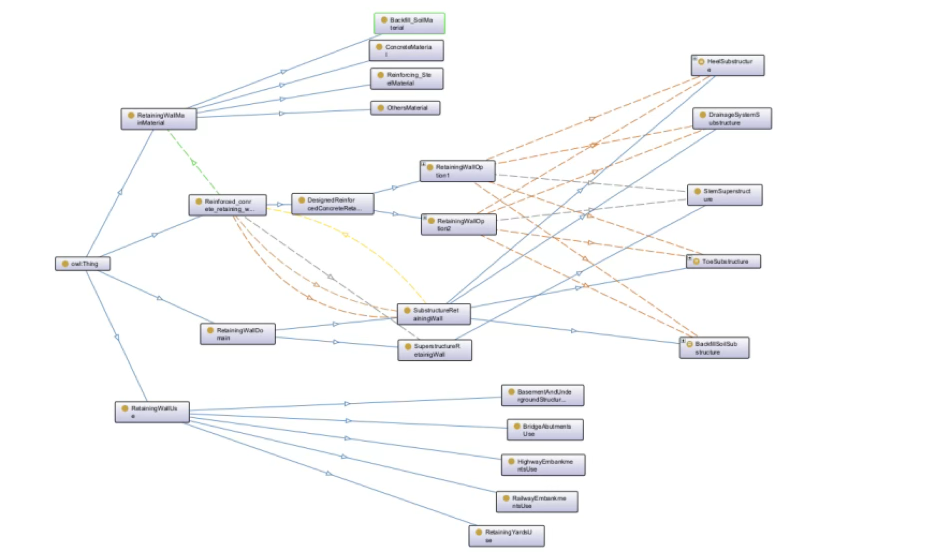
An OWL-based ontology was designed following a recognized ontology development methodology. Core structural components such as the stem, base plate, heel, toe, and backfill soil were modeled alongside key design parameters including safety factors, friction angles, concrete strength, and drainage conditions. Two design alternatives representing lower and upper safety limits were instantiated within the same ontology and validated using logical reasoning tools to ensure internal consistency.
Outcome & Relevance
The resulting ontology demonstrates how complex engineering knowledge can be formalized to support digital design comparison, quality control, and long-term information management. It provides a solid foundation for integration with BIM platforms and decision-support systems, contributing to more transparent, reliable, and sustainable civil engineering workflows.