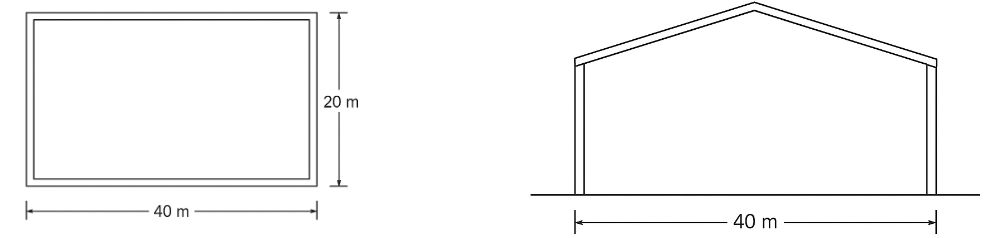
Figure 1: Warehouse Top View and Warehouse Front View
Project Overview
In modern industrial construction, the selection of building envelope systems plays a critical role in achieving sustainable and resilient infrastructure. Among these systems, exterior wall and roof cladding are particularly important, as they directly influence environmental performance, durability, and long-term operational efficiency of warehouse structures.
Subsystem: Exterior Wall and Roof Cladding
The cladding system forms the primary protective layer of the building, shielding the structure from environmental exposure while contributing to thermal and structural performance. Inadequate cladding selection can lead to increased maintenance demands, higher emissions, and reduced service life. Therefore, choosing an appropriate cladding system during the early design stage is essential.
In this assignment, three cladding design options were compared: (1) Single-skin steel sheeting (Option A), (2) EPS-core sandwich panels (Option B), and (3) Fibre-cement rainscreen system (Option C). All options fulfill the same functional requirements, as the building geometry and enclosed floor area remain identical across the alternatives.
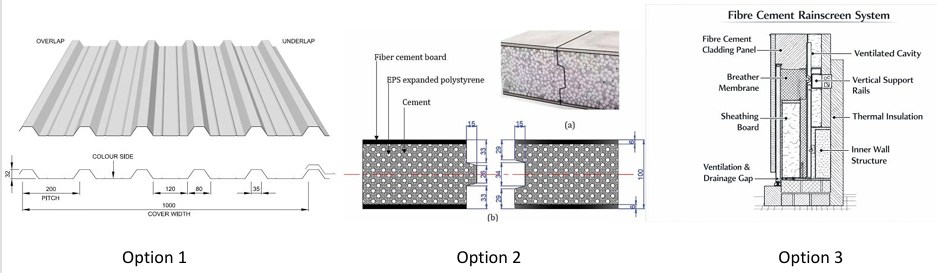
Figure 2 : Sketch of the three Options
The analysis shows that cladding system selection should not be based solely on initial
cost or structural simplicity. Single-skin steel sheeting remains the cheapest upfront but
performs poorly over the building’s lifetime due to maintenance-related emissions and
expenses. Sandwich panels strike a balance between maintenance and cost, but their
environmental performance suffers because of the embodied impact of EPS. Fibre-
cement rainscreen systems achieve the best environmental performance and offer
improved durability, though at a higher initial cost.
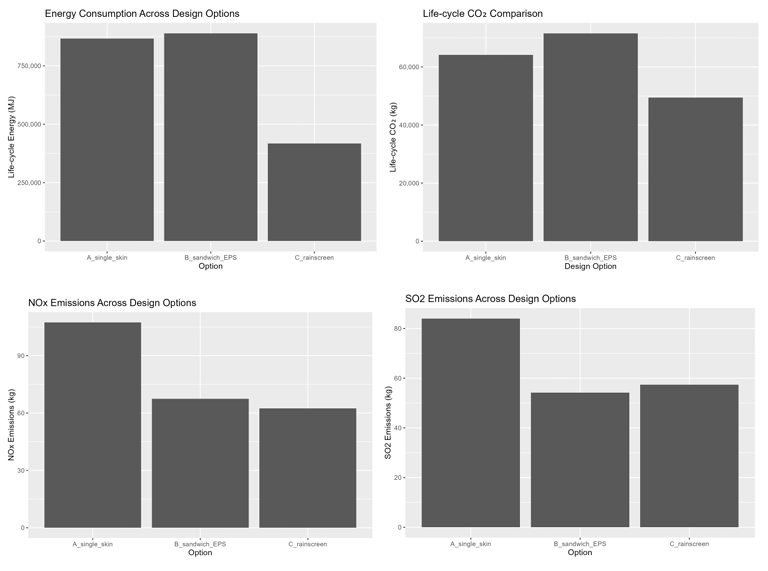
Figure 3 : LCA Results
When the decision problem is framed using weighted MCDA, the preferred alternative
depends on the criteria prioritized. If environmental sustainability is paramount, the
fibre-cement rainscreen system is the most appropriate choice. If minimizing initial
financial expenditure is essential, the single-skin steel system becomes preferable. The
study therefore illustrates the fundamental role of value judgements and weighting
preferences in engineering design decisions
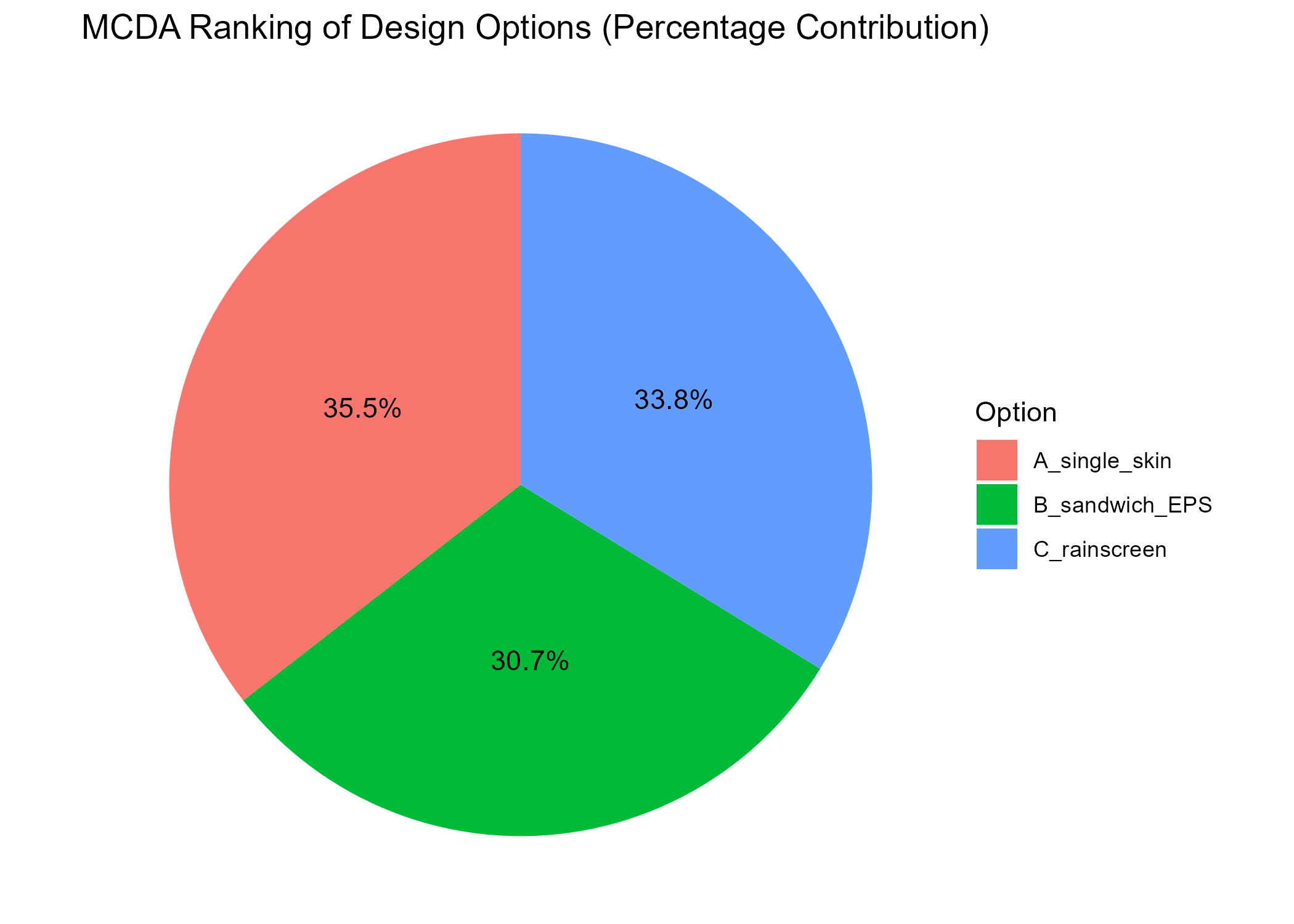
Figure 3 : Ranking of the Design Options
Reference
[1] American Galvanizers Association (2017). Performance and maintenance guidelines for
galvanised steel in exterior applications.
[2] Cembrit (2021). Environmental Product Declaration: Fibre Cement Façade Panels.
[3] EUMEPS (2022). Expanded Polystyrene Insulation Environmental Product
Declarations.
[5] Hammond, G., & Jones, C. (2011). Inventory of Carbon and Energy (ICE), Version 2.0.
University of Bath.
[6]Kingspan (2020–2024). Insulated Panel Technical Datasheets and Environmental
Product Declarations.
[7] Metecno Group (2020–2024). Sandwich Panel Technical Manuals.
[8] ROCKWOOL (2024). Stone Wool Insulation Environmental Product Declarations.
[9] Steel Construction Institute (2015). Corrosion and Coating Performance Guidelines.
[10] Swisspearl (2021). Fibre-Cement Façade System EPDs.
[11] World Steel Association (2021). Global Life Cycle Inventory Study for Steel Products.
Home | Roads | Sewer Pipeline | RCC Tank | Warehouse | Residential Home Foundation