Elevated reinforced cement concrete (RCC) water tanks are widely used for urban and industrial water storage due to their durability, structural reliability, and hydraulic performance. This assignment focuses on developing a parametric model and ontological representation of an elevated RCC tank to evaluate design alternatives and support reasoning-based decision-making. The design adheres to EN 1992-3:2006, DIN 1045-1:2019, and CPHEEO (2013) guidelines.
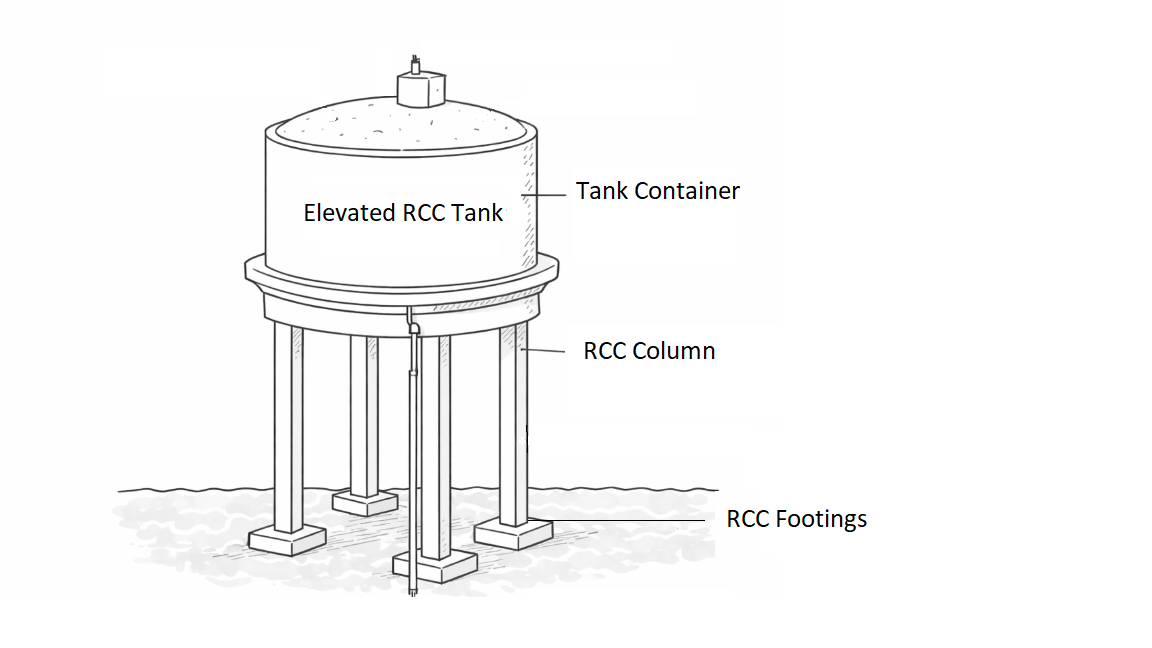
The tank comprises a cylindrical container supported on staging columns with a reinforced foundation. Key structural components include the tank walls, base and roof slabs, and ring beams for horizontal stiffening. The system interacts with external water networks through inlet and outlet pipes and is exposed to environmental conditions represented via concrete exposure classes (XA2, XC4).
Ontology
An OWL-based ontology was developed in Protégé to formalize the tank structure, materials, exposure conditions, and operational interfaces. Subclasses include Substructure, Superstructure, Main Material, and Appurtenances, while properties such as hasCapacity, hasHeight, and hasMaterialGrade define design parameters. The ontology enables automated reasoning for consistency checks, alternative design evaluation, and integration with BIM environments.
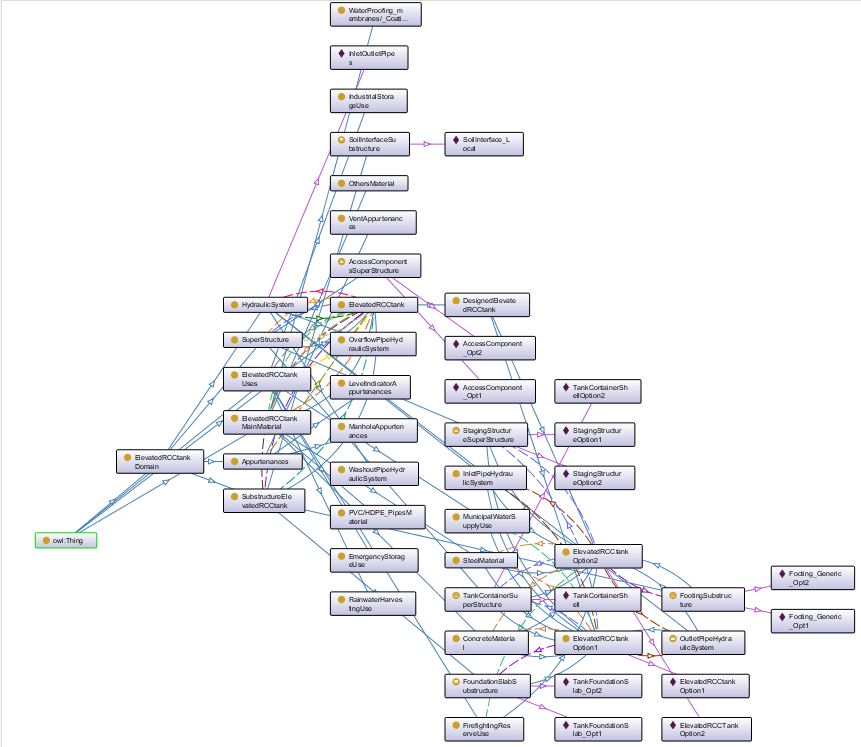
Figure 1: OntoGraf visualization of Elevated RCC Tank Ontology (Protégé).
Parametric Model
Using Dynamo BIM, a parametric model of the cylindrical tank was developed. Main parameters include:
- Tank Diameter (D): 8–12 m
- Tank Height (H): 4–6 m
- Wall Thickness (t): 0.2–0.3 m
- Slab Thickness (t_slab): 0.15–0.3 m
The model generates base and top points, vertical stiffeners, and ring beams. Changing the diameter, height, or wall thickness automatically updates geometry and material volume, allowing rapid evaluation of multiple design alternatives.
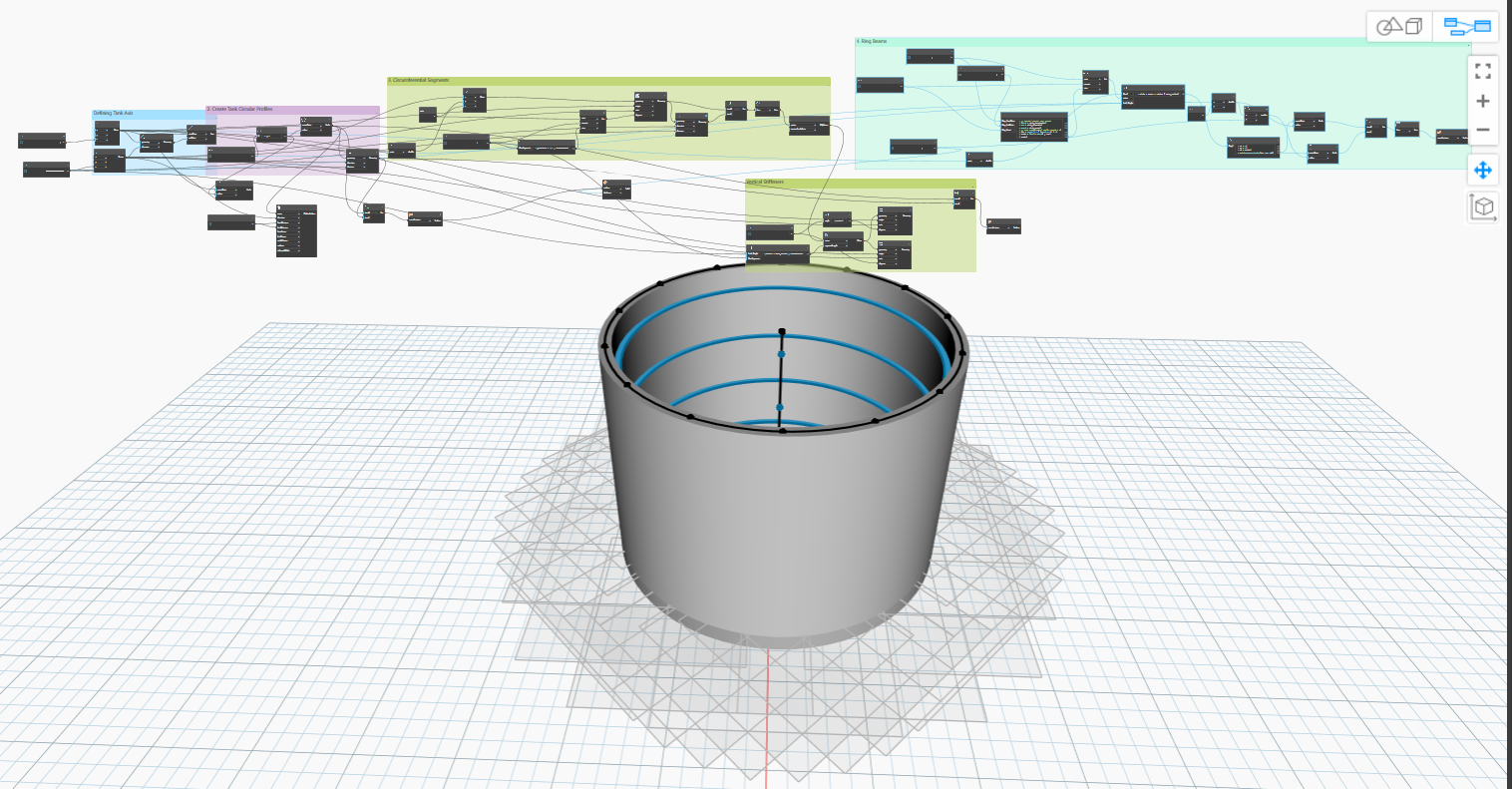
Figure 2: Parametric elevated RCC tank generated using Dynamo BIM.
Two High-Performance Criteria were defined for this RCC tank:
- Material Efficiency (ME) ,Water volume stored per unit of concrete used
- Hydraulic Head Effectiveness (HHE) , Water column height per unit of concrete
Higher values indicate more efficient use of materials for storage and hydraulic delivery.
Table 1: RCC Tank Design Performance
| Option | Height (m) | Diameter (m) | Concrete Volume (m³) | Storage Volume (m³) | ME | HHE |
| 1 | 4 | 8 | 50 | 201 | 4.02 | 0.08 |
| 2 | 5 | 10 | 90 | 392 | 4.36 | 0.056 |
| 3 | 6 | 12 | 150 | 678 | 4.52 | 0.04 |
- Increasing diameter and height improves storage efficiency (ME).
- HHE decreases for larger tanks as material volume grows faster than water column height.
- Option 2 offers a balanced trade-off between material efficiency and hydraulic performance.
Conclusion
The RCC tank parametric model and ontology provide a structured, efficient framework for exploring design alternatives. Material efficiency and hydraulic head effectiveness enable informed selection of tank dimensions, balancing structural requirements with resource usage. The ontology ensures consistency, supports reasoning, and facilitates future integration with BIM and urban water networks. This standalone evaluation highlights the value of parametric modeling in optimizing elevated RCC tank design for urban water storage applications.
References
- CPHEEO. (2013). Manual on Water Supply and Treatment. Government of India.
- DIN 1045-1. (2019). Concrete, reinforced and prestressed concrete structures – Part 1: Design and construction.
- EN 1992-3. (2006). Design of concrete structures – Liquid retaining and containment structures.
- Autodesk. (2023). Dynamo for Civil Engineering – Introduction to Parametric Modeling.
- McCormac, J., & Nelson, J. (2020). Structural Analysis and Design of RCC Water Tanks. McGraw-Hill.