This scenario focuses on conditions where rainfall and slope behaviour become more critical. The aim is to improve drainage related stability and overall slope performance, particularly on the mountain side and at the lower part of the terrain.
In this case, the main design changes are applied to the retaining walls that directly interact with water and soil movements. Other components are adjusted only as much as needed to remain compatible with the modified conditions.
Table 9 – Design Parameter Configuration for Scenario 2 (Drainage-Focused Design)

Based on the design principles described above, the design parameters assigned within the parametric model are presented in the table below.
Table 10 – Design Parameters Used in Scenario 2 (Drainage-Focused Design)
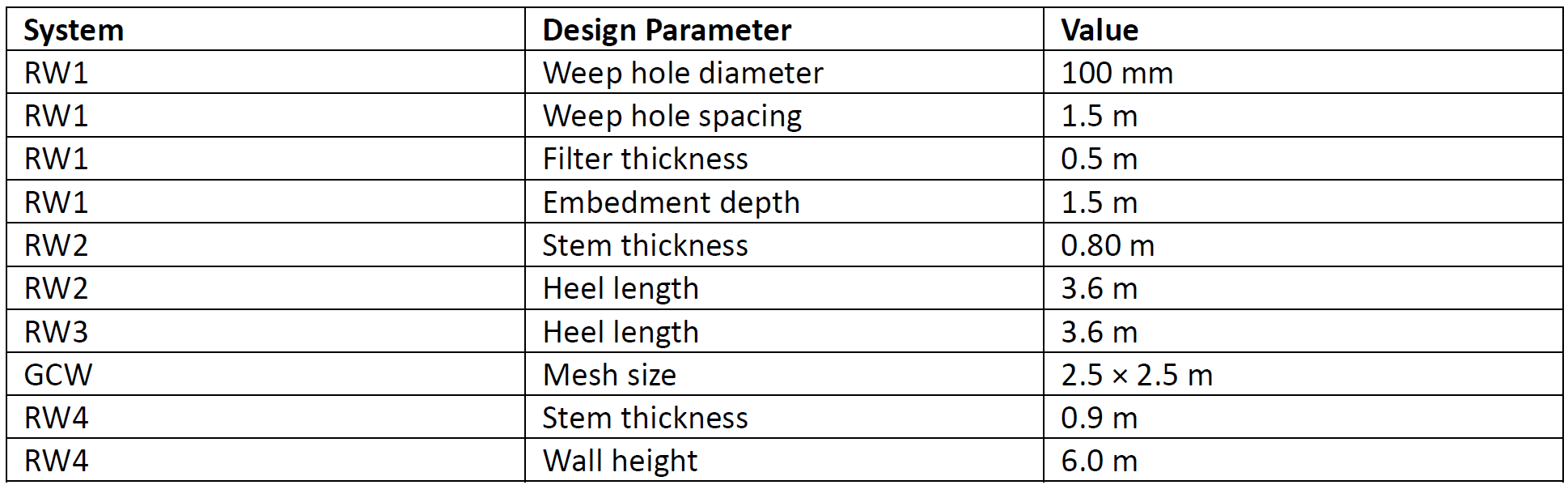
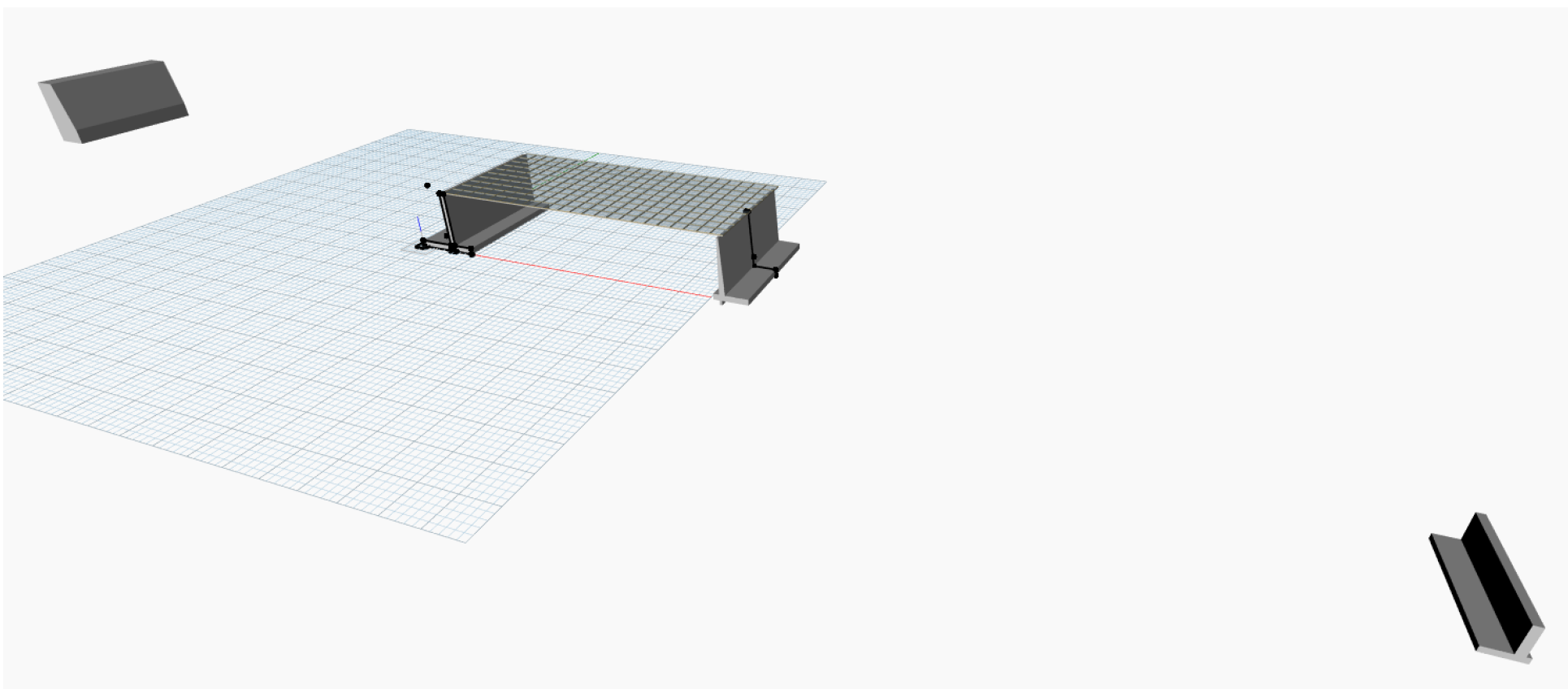
Figure 5 – Parametric Model Output for Scenario 2 (Drainage-Focused Design)
In this scenario, the design parameters of structural elements that are directly related to drainage, as well as upper-level system components that are affected by changes in drainage performance, are strengthened. The scenario does not include a direct rainfall simulation. Instead, it focuses on understanding how increasing drainage capacity and overall stability influences system safety through cascading effects.
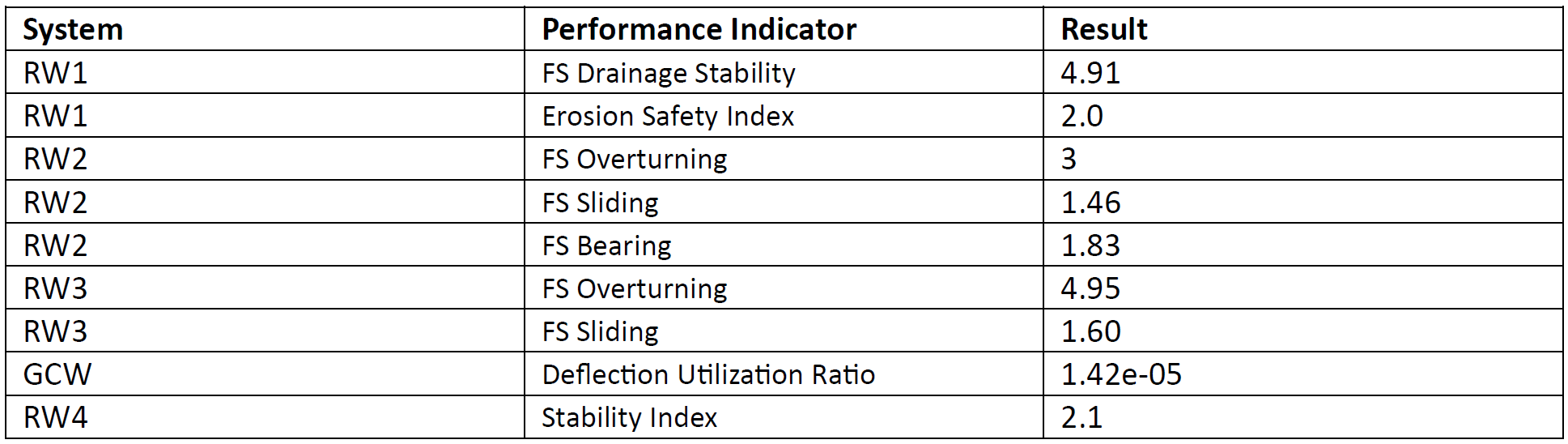
The design changes applied to the mountain side retaining wall (RW1) form the core of this scenario. Larger and more closely spaced weep holes, a thicker filter layer, and a deeper embedment lead to a clear increase in the drainage related safety factor. In addition, the increased embedment depth also improves the erosion safety index. With these improvements, RW1 no longer governs the system behavior. Possible domino effects caused by extreme rainfall or drainage failure, which could otherwise affect upper level structural components, are effectively prevented. As a result, failure scenarios where drainage or erosion related problems at RW1 could make the entire system unusable are avoided.
For Retaining Walls RW2 and RW3, which define the excavation boundaries and are expected to be indirectly influenced under extreme rainfall conditions, the design interventions are carried out through geometric modifications, since these walls do not include drainage systems. The improved section geometries result in higher safety factors against overturning, sliding, and bearing capacity. These improvements not only increase the stability of the excavation area, but also strengthen the structural boundary conditions required for the safe performance of the glass curtain wall located above.
The glass curtain wall system is kept with the same panel configuration as in the baseline scenario. Therefore, the deflection utilisation ratio remains unchanged. However, due to the increased stability of RW2 and RW3, the glass curtain wall operates within a structurally safer environment. This shows that the performance of the glass system is indirectly influenced by the behavior of the retaining walls that support and define it.
At the lower level of the site, Retaining Wall RW4 is considered as an element that is directly affected by increased soil mass and water retention under rainfall conditions. For this reason, the stem thickness is
increased, leading to a clear improvement in the stability index. The wall height is kept the same as in the baseline scenario, since increasing stem thickness is considered more effective than increasing wall height. The improvement achieved in RW4 not only enhances lower slope stability, but also indirectly supports the safety of the upper system components.
Overall, Scenario 2 shows that targeted design changes focusing on drainage capacity and retaining wall stability can significantly improve system safety. The results demonstrate that safety is enhanced not only through individual components, but also through the interactions between system elements. At the system level, this scenario clearly identifies which design parameters and components play a key role in maintaining functionality under extreme rainfall-related conditions.
Table 11 – Performance Indicators Obtained for Scenario 2 (Drainage-Focused Design)