1. System Overview and Engineering Context
Urban road infrastructure is a complex socio-technical system rather than a simple physical asset. It interacts continuously with traffic demand, climate conditions, user behavior, maintenance policies, and budgetary constraints. From a systems engineering perspective, a road is expected to deliver a defined level of service such as safety, comfort, and availability over a long design life, often under uncertain and evolving conditions.
Traditional road design approaches often focus on initial construction quality and structural capacity. However, experience shows that long-term performance is governed just as strongly by deterioration mechanisms, maintenance timing, and decision-making under uncertainty. This has led to a shift from purely deterministic design methods toward probabilistic and life-cycle-based approaches, where risk, uncertainty, and long-term impacts are explicitly considered.
In this integrated framework, road infrastructure is treated as a whole-life civil system, where decisions made during design influence not only structural durability but also future maintenance needs, environmental emissions, and economic costs. As a result, evaluating road systems requires combining performance modelling (how condition changes over time) with sustainability assessment (how much energy, emissions, and cost are generated across the life cycle).
Two complementary analytical approaches are therefore integrated in this study:
- Risk-based condition modelling, which focuses on how road condition evolves under uncertainty and how maintenance strategies affect reliability and availability.
- Life-Cycle Assessment and Multi-Criteria Decision Making, which quantify environmental and economic impacts of different pavement design options over their entire lifespan.
Together, these methods allow decision-makers to move beyond short-term optimization and toward robust, long-term infrastructure planning that balances performance, risk, cost, and environmental responsibility.
Road deterioration is a stochastic process influenced by many interacting factors, including traffic loading, axle weights, material aging, moisture infiltration, temperature cycles, and construction quality. Because these influences are variable and often unpredictable, purely deterministic models struggle to represent real-world behavior accurately.
The Markov Chain model provides a mathematically simple yet powerful way to represent this uncertainty. In a Markov process, the system is described by a finite number of discrete states, and transitions between these states occur with known probabilities. The defining characteristic of the Markov property is that the future state depends only on the current state, not on the full sequence of past states. In the context of road infrastructure, this assumption is reasonable because the current physical condition of a pavement largely determines its short-term future performance.
By discretizing road condition into a small number of meaningful states, engineers can model deterioration as a stepwise degradation process. Maintenance actions then act as control interventions that alter transition probabilities, slowing deterioration or restoring condition. This makes Markov models especially suitable for maintenance planning, reliability analysis, and long-term forecasting in infrastructure systems.
Importantly, the Markov approach does not aim to predict the exact condition of a specific road at a specific time. Instead, it provides probabilistic insights into how a population of roads or a representative road section is expected to behave over time, which is highly valuable for strategic planning and policy decisions.
Together, these methods allow decision-makers to move beyond short-term optimization and toward robust, long-term infrastructure planning that balances performance, risk, cost, and environmental responsibility.
2. Road Condition Modelling Using Markov Chains
2.1 Concept and Theory
Road deterioration is a stochastic process influenced by many interacting factors, including traffic loading, axle weights, material aging, moisture infiltration, temperature cycles, and construction quality. Because these influences are variable and often unpredictable, purely deterministic models struggle to represent real-world behavior accurately.
The Markov Chain model provides a mathematically simple yet powerful way to represent this uncertainty. In a Markov process, the system is described by a finite number of discrete states, and transitions between these states occur with known probabilities. The defining characteristic of the Markov property is that the future state depends only on the current state, not on the full sequence of past states. In the context of road infrastructure, this assumption is reasonable because the current physical condition of a pavement largely determines its short-term future performance.
By discretizing road condition into a small number of meaningful states, engineers can model deterioration as a stepwise degradation process.
Mean Time to Failure (MTTF) represents the expected duration a road remains functional before entering a failed or unacceptable condition. In transport infrastructure, failure does not necessarily imply complete collapse; instead, it often corresponds to a state where service levels fall below acceptable thresholds due to safety concerns, excessive roughness, or structural damage.
Mean Time to Repair (MTTR) represents the average time required to restore the system from a failed state back to an acceptable condition. For road systems, MTTR captures not only physical repair duration but also operational disruption, such as lane closures and reduced capacity.
Together, MTTF and MTTR define the availability of the road system, which is a key performance indicator for network-level planning. A system with a high MTTF and low MTTR is more reliable, causes fewer disruptions to users, and typically results in lower indirect economic costs. These metrics provide a direct bridge between technical deterioration models and service-oriented infrastructure management.
2.2 Road Condition Indicators (IRI)
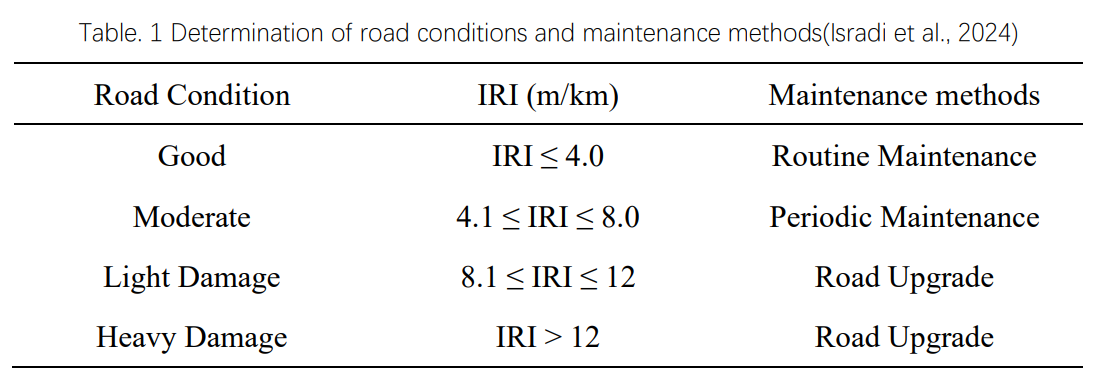
Road condition is quantified using the International Roughness Index (IRI), which measures surface roughness and directly relates to ride comfort and structural performance. IRI thresholds are used to assign maintenance actions, linking physical condition to management decisions.
2.3 Transition Probability Matrices
Two maintenance strategies are modelled:
- Routine Maintenance
- Periodic Maintenance
Each strategy has its own transition probability matrix, reflecting how maintenance slows deterioration or improves road condition.
2.4 Goal and Scope of LCA
Life-Cycle Assessment (LCA) is a standardized environmental evaluation method that quantifies the cumulative impacts of a product or system across its entire life cycle. For road infrastructure, this perspective is essential because environmental impacts are not limited to construction but are distributed across material production, construction activities, maintenance operations, and eventual rehabilitation.
The goal of the LCA in this study is to compare three pavement design alternatives asphalt, concrete, and composite under identical functional conditions. By keeping the functional unit constant (a 1 km, two-lane road with a defined service life), differences in environmental performance can be attributed directly to design and material choices rather than scale effects.
The selected system boundary follows a production-to-maintenance approach, focusing on material extraction, processing, pavement construction, and recurring maintenance interventions. Although use-phase effects such as vehicle fuel consumption and traffic delay emissions are not included, the chosen boundary still captures the dominant impacts associated with infrastructure provision. This approach aligns with common practice in pavement LCA studies and allows for transparent comparison between alternatives and utility cuts. These are modeled using a fault tree, which estimates the probability of overall road failure based on individual failure mechanisms.
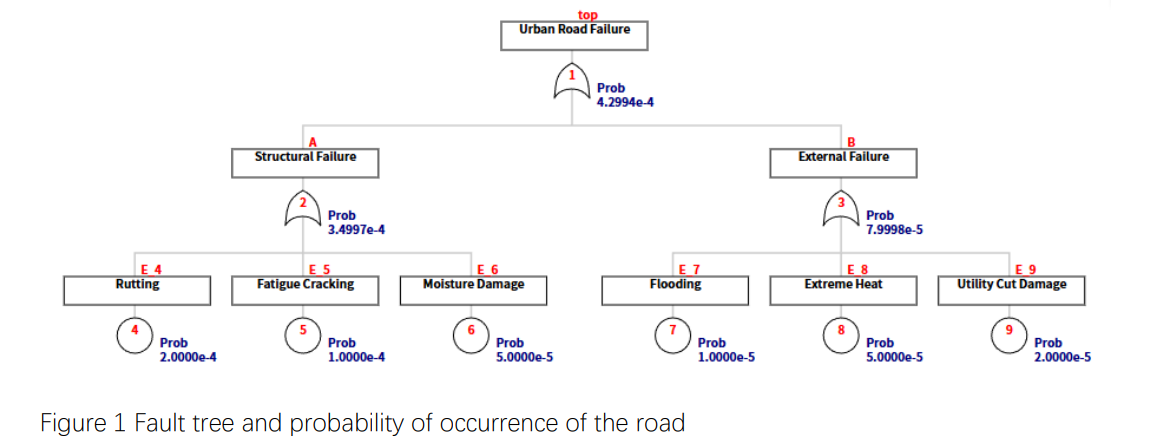
This step introduces risk explicitly into the system model.
2.5 Reliability Metrics: MTTF and MTTR
To translate deterioration behavior into system performance indicators, concepts from reliability engineering are applied. Roads, like other engineered systems, can be viewed as assets that alternate between operational and failed states over time.
Mean Time to Failure (MTTF) represents the expected duration a road remains functional before entering a failed or unacceptable condition. In transport infrastructure, failure does not necessarily imply complete collapse; instead, it often corresponds to a state where service levels fall below acceptable thresholds due to safety concerns, excessive roughness, or structural damage.
Mean Time to Repair (MTTR) represents the average time required to restore the system from a failed state back to an acceptable condition. For road systems, MTTR captures not only physical repair duration but also operational disruption, such as lane closures and reduced capacity.
Together, MTTF and MTTR define the availability of the road system, which is a key performance indicator for network-level planning. A system with a high MTTF and low MTTR is more reliable, causes fewer disruptions to users, and typically results in lower indirect economic costs. These metrics provide a direct bridge between technical deterioration models and service-oriented infrastructure management.
2.6 Probability Evolution Over Time
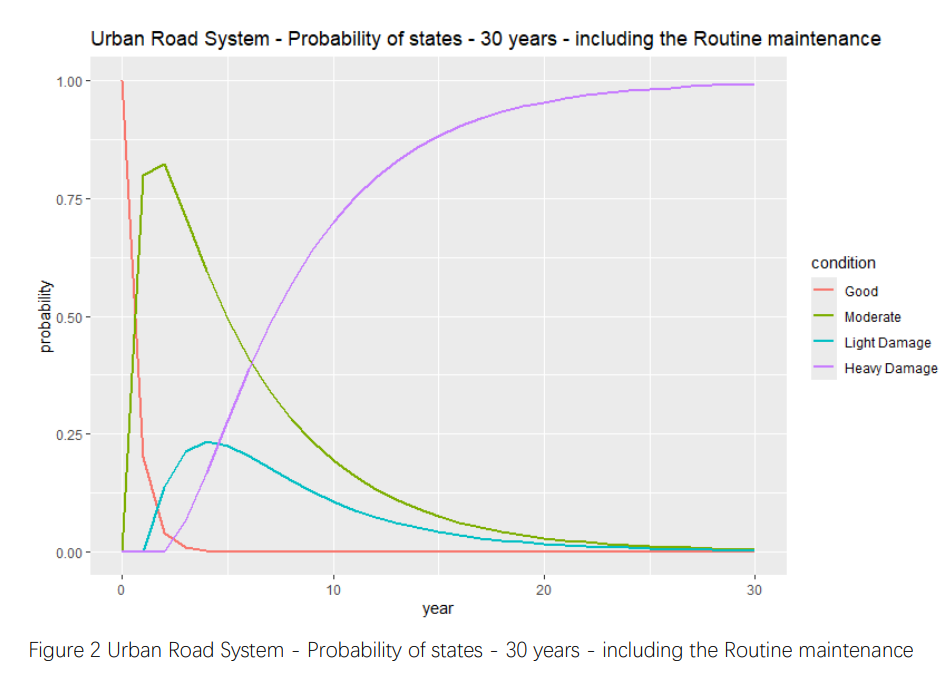
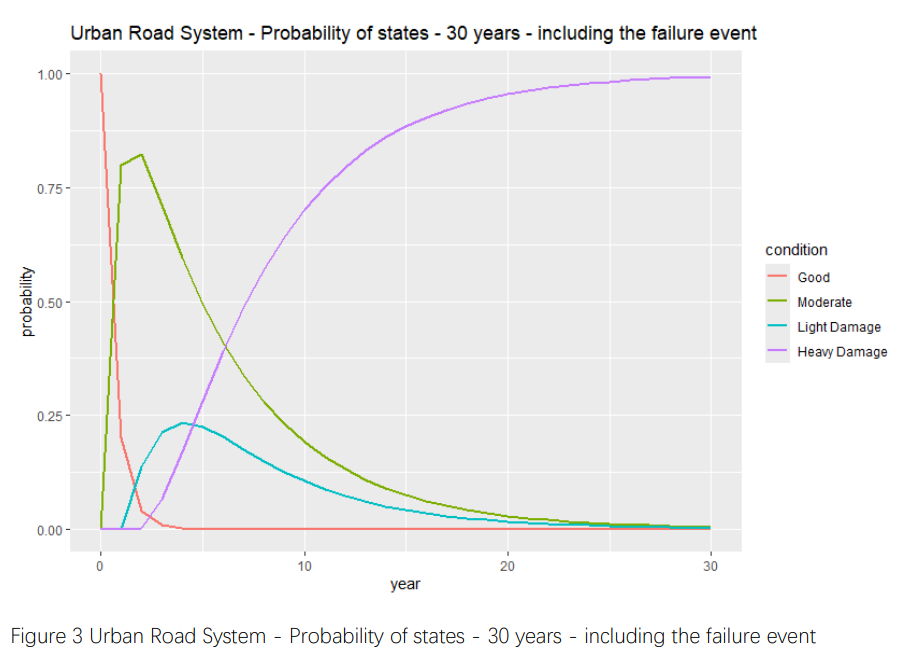
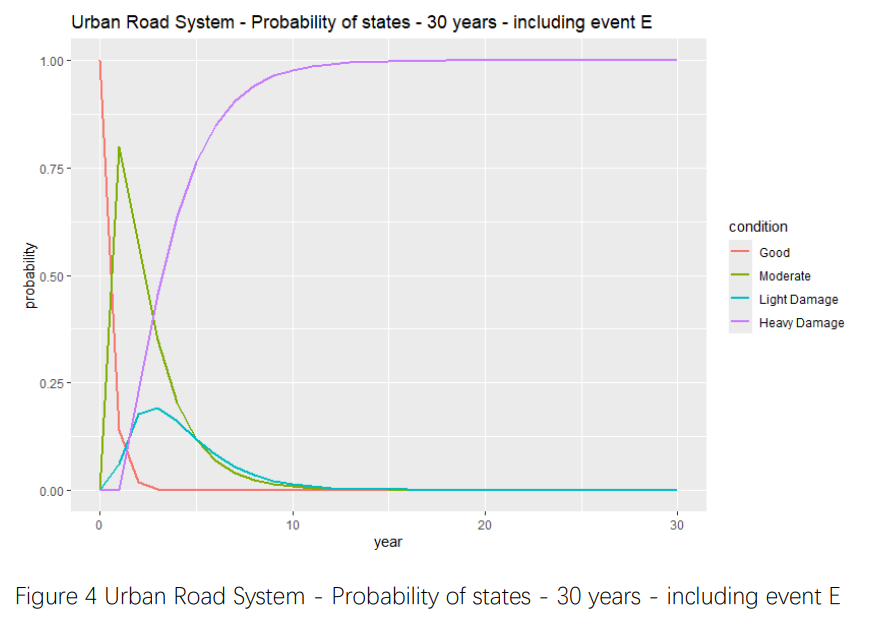
Using the Markov model, the probability of each road condition state is simulated over a 30‑year service life under different assumptions.
- Probability of states – Routine maintenance
- Probability of states – Including failure events
- Probability of states – Including event E
- Probability of states – Periodic maintenance
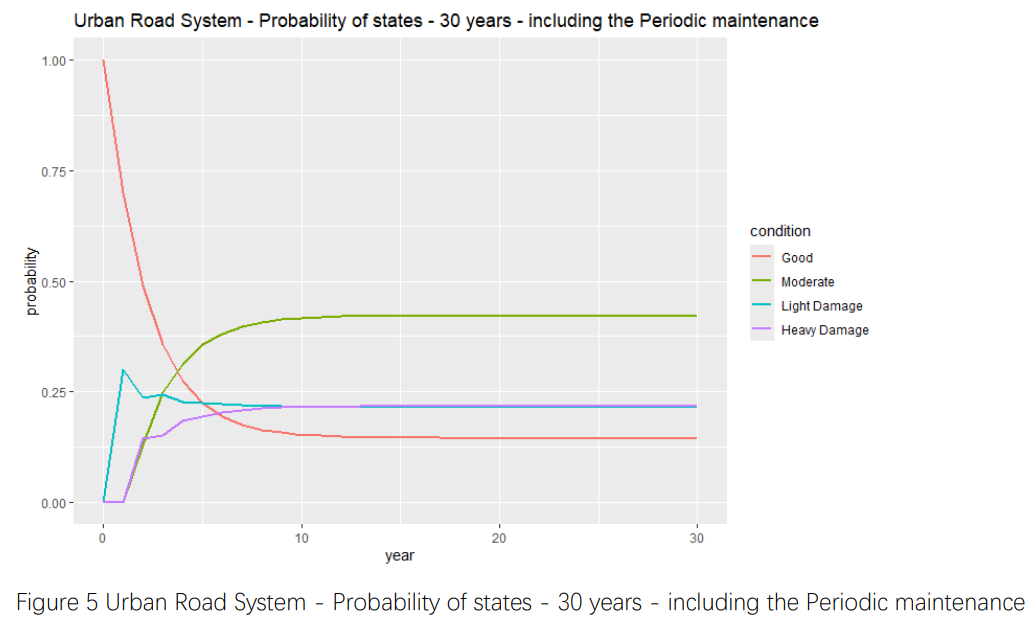
These graphs clearly show that periodic maintenance significantly reduces the probability of severe damage, improving long‑term system performance.
3. Life‑Cycle Assessment of Pavement Designs
3.1 Goal and Scope of LCA
Life-Cycle Assessment (LCA) is a standardized environmental evaluation method that quantifies the cumulative impacts of a product or system across its entire life cycle. For road infrastructure, this perspective is essential because environmental impacts are not limited to construction but are distributed across material production, construction activities, maintenance operations, and eventual rehabilitation.
The goal of the LCA in this study is to compare three pavement design alternatives asphalt, concrete, and composite under identical functional conditions. By keeping the functional unit constant (a 1 km, two-lane road with a defined service life), differences in environmental performance can be attributed directly to
3.2 Pavement Design and Structural Configuration
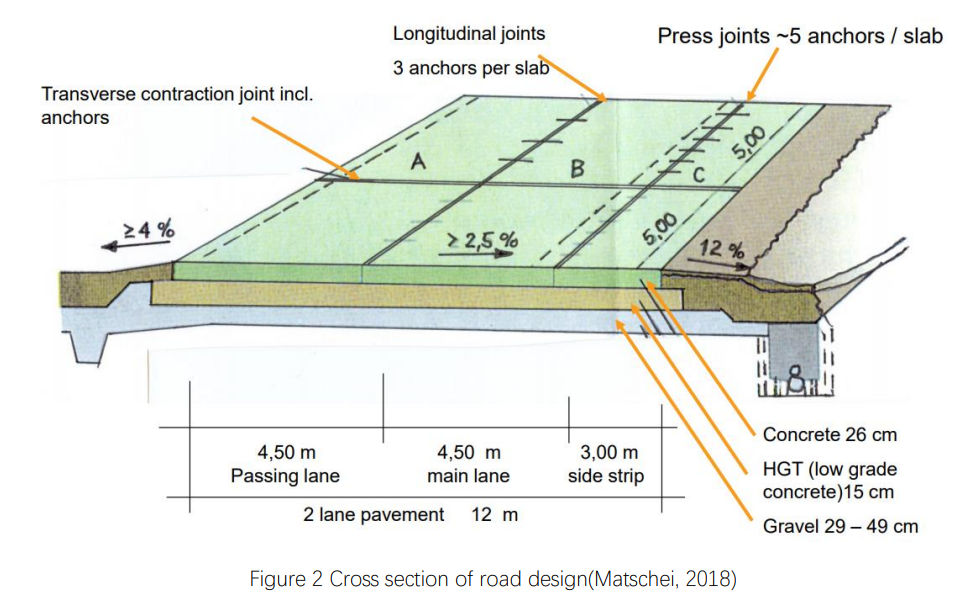
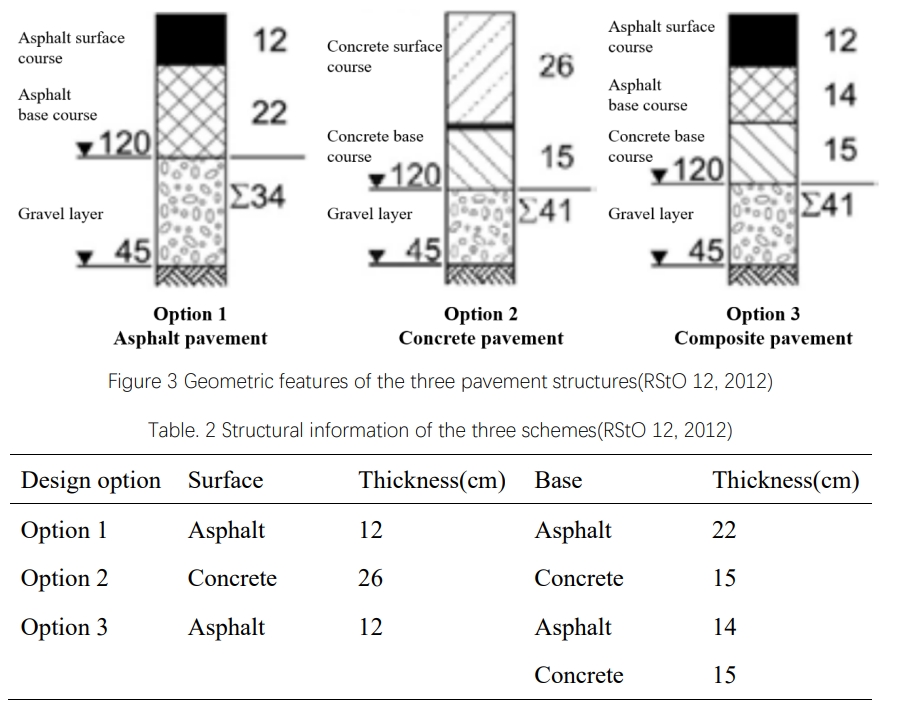
The analysis considers a 1 km, two‑lane road designed according to RStO 12. Gravel layers are excluded to focus on surface and base layers, ensuring consistency across scenarios.
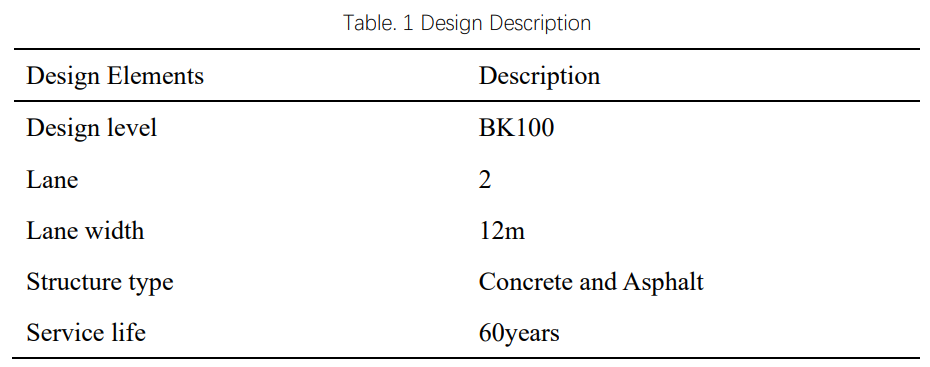
Design description
- Cross‑section of pavement structure
- Structural layer thickness for three options
3.3 Life‑Cycle Inventory (LCI)
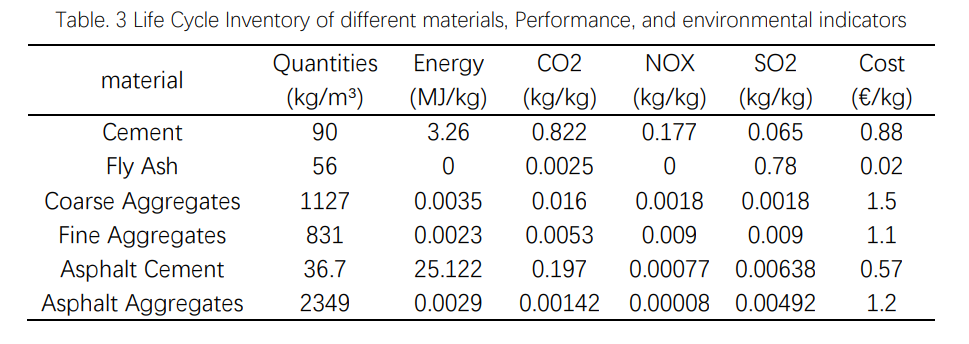
The LCI quantifies material composition, energy use, emissions (CO₂, NOx, SO₂), and costs for concrete and asphalt mixtures. These values form the numerical foundation of the LCA.
Table :
3.4 Maintenance Interventions and Lifespan
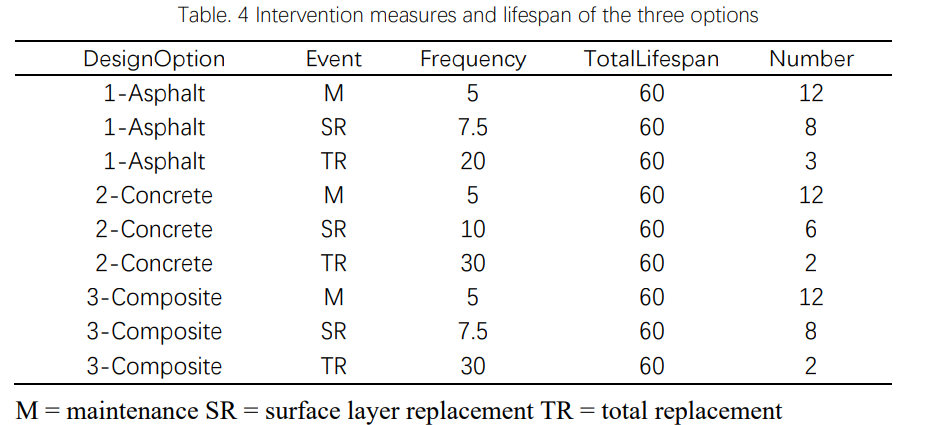
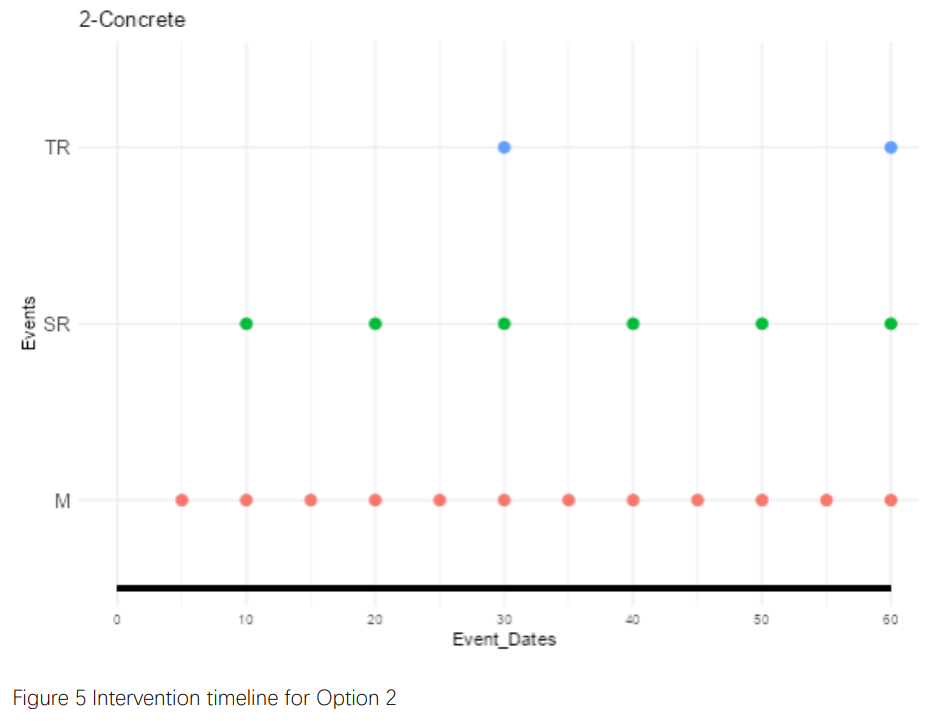
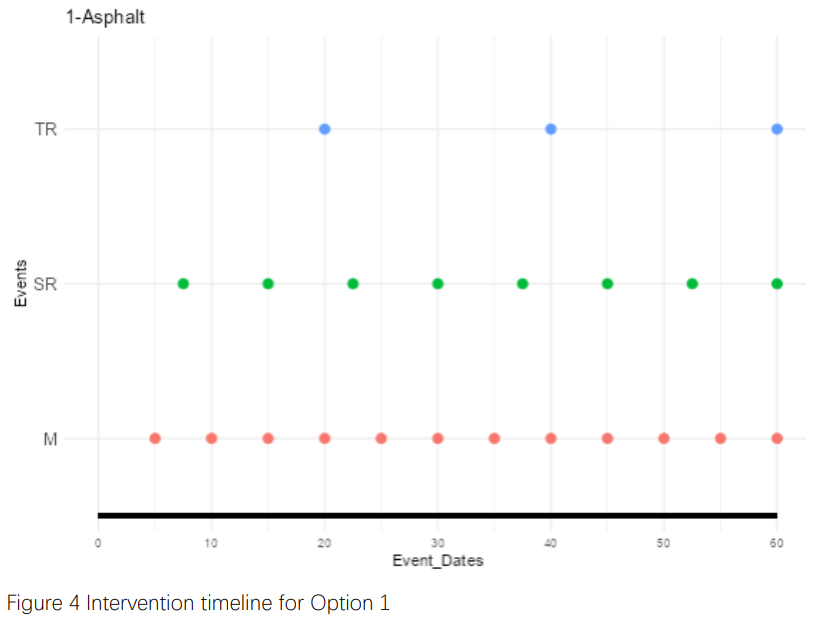
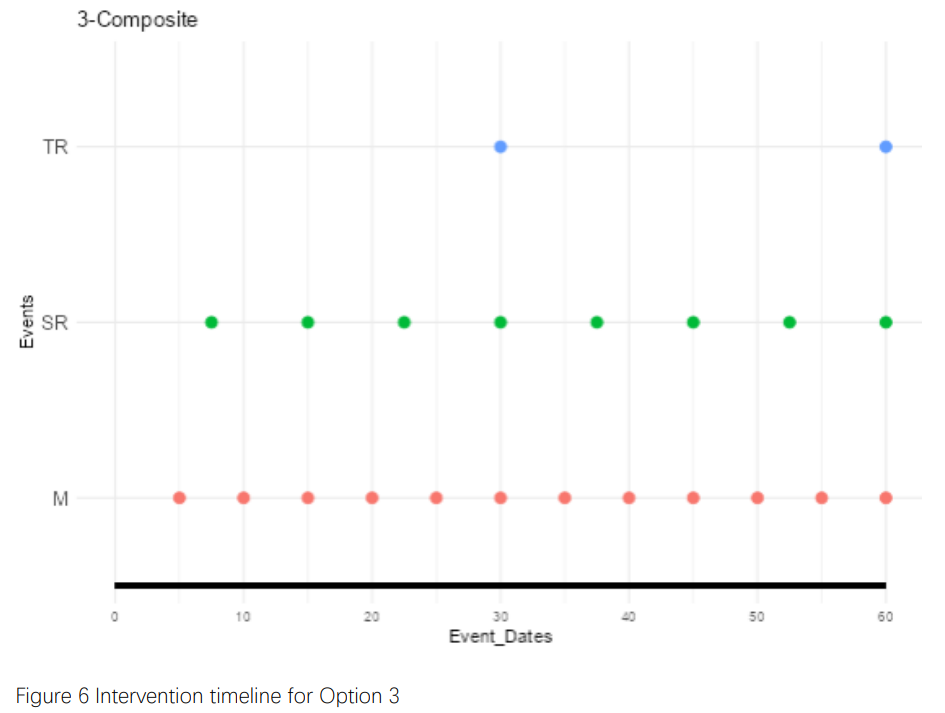
Different pavement types require different intervention frequencies. Asphalt requires more frequent resurfacing, while concrete has longer intervals between major interventions.
- Figures:
4. Environmental and Economic Results
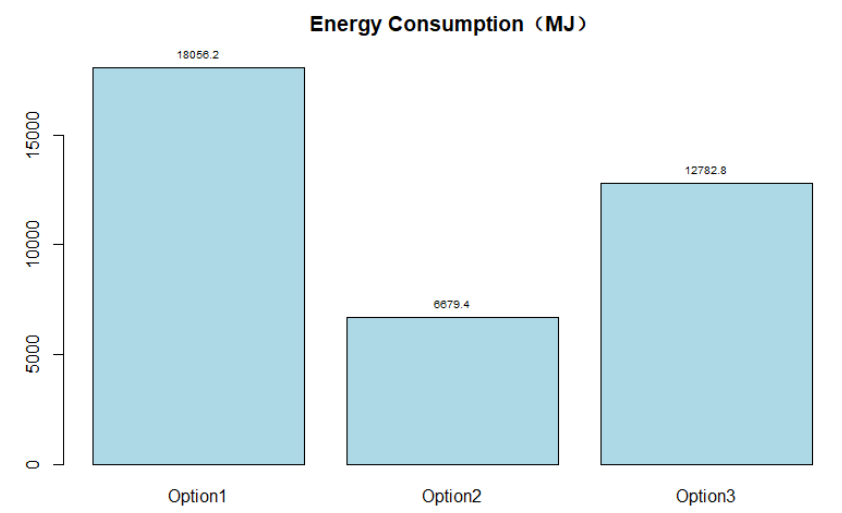
4.1 Energy Consumption
Asphalt pavement shows the highest energy consumption, mainly due to high‑temperature production processes.
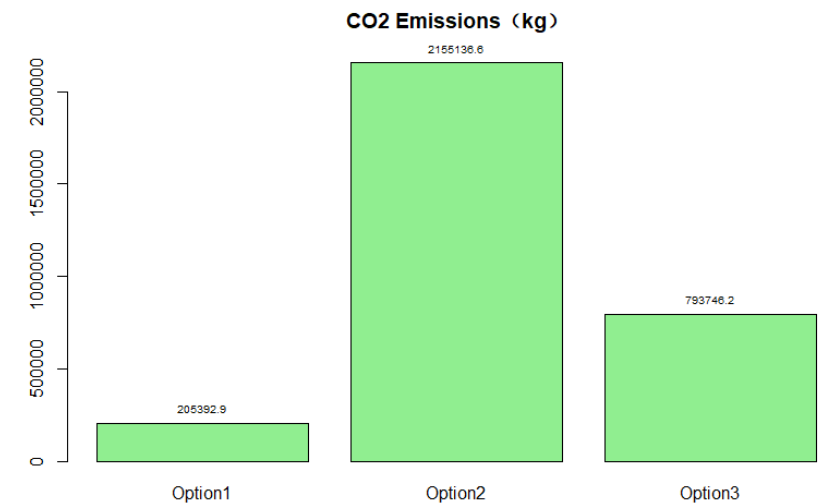
4.2 CO₂ Emissions
Concrete pavements generate the highest CO₂ emissions, largely due to cement clinker production, while asphalt performs best in this category.
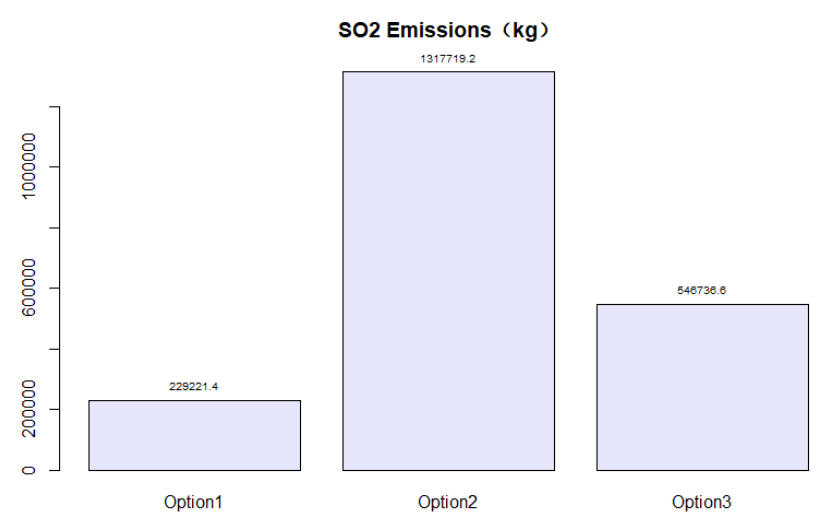
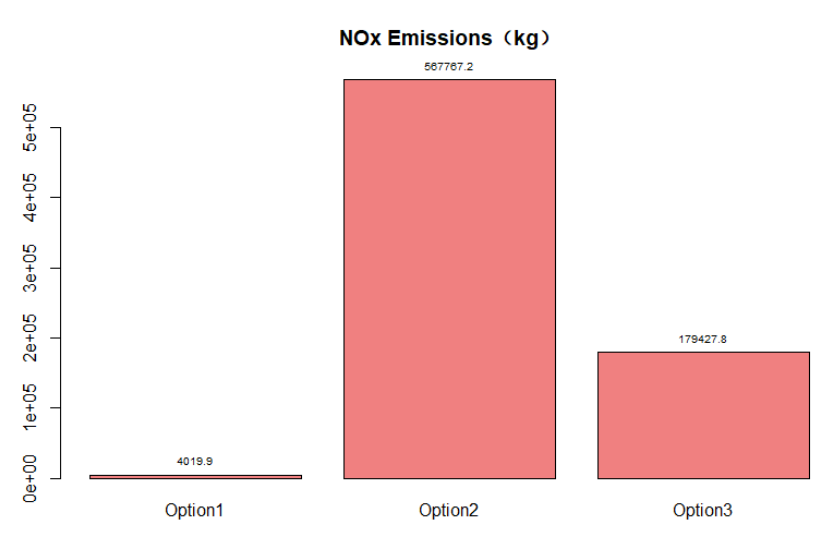
4.3 NOx and SO₂ Emissions
High‑temperature cement kilns lead to significantly higher NOx and SO₂ emissions for concrete pavements.
4.4 Cost Comparison
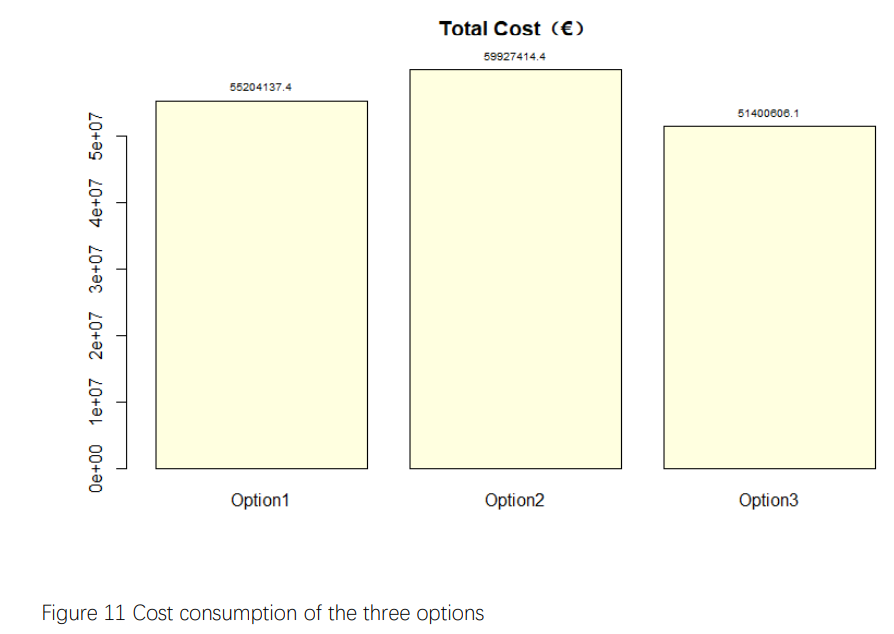
When maintenance over 60 years is included, composite pavement emerges as the least‑cost option, while concrete is the most expensive.
5. Multi‑Criteria Decision Making (AHP)
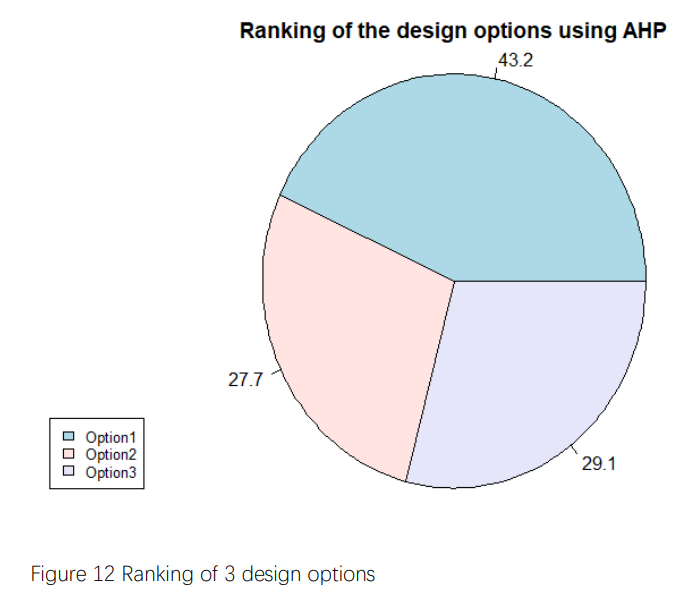
The Analytic Hierarchy Process combines environmental and economic indicators using weighted priorities:
Cost > CO₂ > Energy > NOx > SO₂
This integrated evaluation identifies asphalt pavement as the best overall option, despite its higher energy use.
6. Integrated Interpretation for System‑Level Planning
When both assignments are viewed together:
- Markov models explain how and when roads deteriorate.
- LCA and AHP explain which designs minimize long‑term cost and environmental impact.
This integrated framework supports evidence‑based road system planning, enabling engineers and policymakers to balance reliability, sustainability, and cost over the full life cycle.
References:
- ISO. (2006). ISO 14040:2006 Environmental management — Life cycle assessment — Principles and framework. International Organization for Standardization.
- ISO. (2014). ISO 55000:2014 Asset management — Overview, principles and terminology. International Organization for Standardization.
- ISO. (2014). ISO 55001:2014 Asset management — Management systems — Requirements. International Organization for Standardization.
- Harvey, J., Meijer, J., Ozer, H., Al-Qadi, I. L., Saboori, A., & Kendall, A. (2016). Pavement Life Cycle Assessment Framework (FHWA-HIF-16-014). Federal Highway Administration (FHWA).
- ASTM. (2021). ASTM E1926-08(2021): Standard Practice for Computing International Roughness Index of Roads from Longitudinal Profile Measurements. ASTM International.
- FHWA. (n.d.). Highway Performance Monitoring System (HPMS) Field Manual (IRI used as a roughness measure for HPMS). Federal Highway Administration.
- George, K. P. (1987). Using the Markov process as a pavement management tool (Markov transition probability concept in PMS). Transportation Research Record 1123.
- Saha, P., Ksaibati, K., & Atadero, R. (2017). Developing pavement distress deterioration models for pavement management system using Markovian probabilistic process. Advances in Civil Engineering, 2017, 1–9.
- Sati, A. S., Abu Dabous, S., & Zeiada, W. (2020). Pavement deterioration model using Markov chain and International Roughness Index. IOP Conference Series: Materials Science and Engineering, 812(1), 012012.
- Saaty, T. L. (1980). The Analytic Hierarchy Process: Planning, Priority Setting, Resource Allocation. McGraw-Hill.
- FGSV. (2012). Richtlinien für die Standardisierung des Oberbaus von Verkehrsflächen (RStO 12). Forschungsgesellschaft für Straßen- und Verkehrswesen (FGSV).